Understanding Utah's Real Estate Market: What Buyers and Sellers Need to Know Right Now
If you've been following real estate headlines lately, you've probably heard a lot of conflicting information.
One article says it's a buyer's market.
Another says it's a seller's market.
One expert predicts prices will rise.
Another predicts a slowdown.
It's no wonder many buyers and sellers feel uncertain about making a move.
The truth is that real estate is highly local. National headlines may influence public perception, but what matters most is what's happening in your specific market, neighborhood, and price range.
For homeowners and buyers in Utah, understanding the factors that drive our local housing market can help you make informed decisions and move forward with confidence.
Let's break down what's happening and what it means for you.
Utah Continues to Be a Highly Desirable Place to Live
One of the biggest reasons Utah's housing market remains strong is simple:
People want to live here.
Utah consistently ranks among the top states for quality of life, economic opportunity, outdoor recreation, and population growth.
Families are attracted to strong communities and access to world-class recreation.
Professionals are drawn to expanding job opportunities.
Businesses continue investing in the state.
This ongoing demand helps support housing values over time.
While markets naturally experience periods of adjustment, Utah continues to benefit from long-term fundamentals that attract buyers from both inside and outside the state.
Inventory Remains a Major Factor
One of the most important concepts in real estate is supply and demand.
When there are more buyers than available homes, prices tend to rise.
When there are more homes than buyers, prices often stabilize or decline.
In many Utah communities, inventory remains relatively limited compared to historical norms.
Many homeowners currently have mortgage rates significantly lower than today's rates. As a result, some have chosen to stay in their homes rather than sell and take on a higher monthly payment elsewhere.
This has created what's often referred to as a "lock-in effect."
Fewer homeowners selling means fewer homes available for buyers.
Limited inventory continues to play an important role in supporting home values throughout many Utah markets.
Mortgage Rates Are Influencing Buyer Behavior
Interest rates remain one of the most discussed topics in real estate.
Higher rates affect affordability by increasing monthly mortgage payments.
As a result, some buyers have adjusted their budgets, changed their search criteria, or temporarily paused their home search.
However, many buyers have adapted to the current environment.
Rather than waiting indefinitely for rates to change, they're focusing on finding homes that fit their long-term goals and financial situation.
Many buyers also recognize that while rates may fluctuate, home prices and inventory conditions may change as well.
The market has shown that waiting for perfect conditions isn't always the most effective strategy.
Home Prices Have Proven Remarkably Resilient
One of the biggest surprises for many people has been the continued strength of home prices.
Historically, some buyers assumed higher interest rates would lead to significant price declines.
While markets can vary, many Utah communities have experienced relatively stable pricing because demand continues to exceed available inventory.
When fewer homes are available, competition remains strong.
This helps support home values even when financing costs are higher than buyers would prefer.
Every market is unique, but many Utah homeowners have continued to see strong property values despite broader economic uncertainty.
Why Local Market Data Matters
One mistake buyers and sellers often make is relying too heavily on national news.
National trends can provide context, but they don't tell the full story.
The reality is that:
-
Salt Lake County is different from Utah County.
-
Davis County is different from Weber County.
-
One neighborhood may be highly competitive while another experiences slower activity.
Even homes on the same street can perform differently depending on condition, updates, lot size, pricing strategy, and marketing.
This is why local expertise remains so important.
Real estate decisions should be based on accurate local data rather than broad national headlines.
What Buyers Should Be Doing Right Now
For buyers, today's market offers both opportunities and challenges.
The key is preparation.
Successful buyers typically:
-
Get pre-approved before shopping
-
Understand their budget
-
Act quickly when the right home becomes available
-
Focus on long-term goals rather than short-term headlines
Buyers also benefit from having less competition than during some of the frenzied markets of recent years.
While inventory may remain limited, many buyers find they have more time to evaluate properties and negotiate than they did during peak seller-market conditions.
What Sellers Should Be Doing Right Now
For sellers, proper preparation has never been more important.
Today's buyers are selective.
Homes that are clean, updated, well-priced, and professionally marketed often generate strong interest.
Homes that are overpriced or poorly presented may sit on the market longer than expected.
Sellers should focus on:
-
Curb appeal
-
Professional photography
-
Decluttering
-
Necessary repairs
-
Strategic pricing
The homes that stand out are typically the homes that receive the strongest response from buyers.
Pricing Correctly Matters More Than Ever
The days of simply putting a home on the market and expecting multiple offers above asking price are not guaranteed.
Pricing strategy plays a critical role in today's market.
Overpricing can lead to:
-
Fewer showings
-
Longer market times
-
Price reductions
-
Reduced buyer interest
Proper pricing helps generate momentum from the moment a property hits the market.
The first few weeks are often the most important period of a listing's life.
A strong pricing strategy can make all the difference.
Real Estate Is Still a Long-Term Investment
It's easy to become distracted by short-term market fluctuations.
However, real estate has historically been one of the most effective long-term wealth-building tools available to many Americans.
Homeownership offers benefits beyond potential appreciation:
-
Equity growth
-
Housing stability
-
Personal control over your property
-
Potential tax advantages
-
Long-term financial security
While no investment is guaranteed, many homeowners have benefited significantly from long-term ownership.
The Importance of Having a Plan
Whether you're buying, selling, or considering both, the most successful moves begin with a clear plan.
Understanding your goals, timeline, finances, and local market conditions allows you to make decisions with confidence.
There is no one-size-fits-all answer.
The right strategy for one family may be completely different from the right strategy for another.
That's why professional guidance can be so valuable.
Final Thoughts
The Utah real estate market continues to evolve, but the fundamentals remain strong.
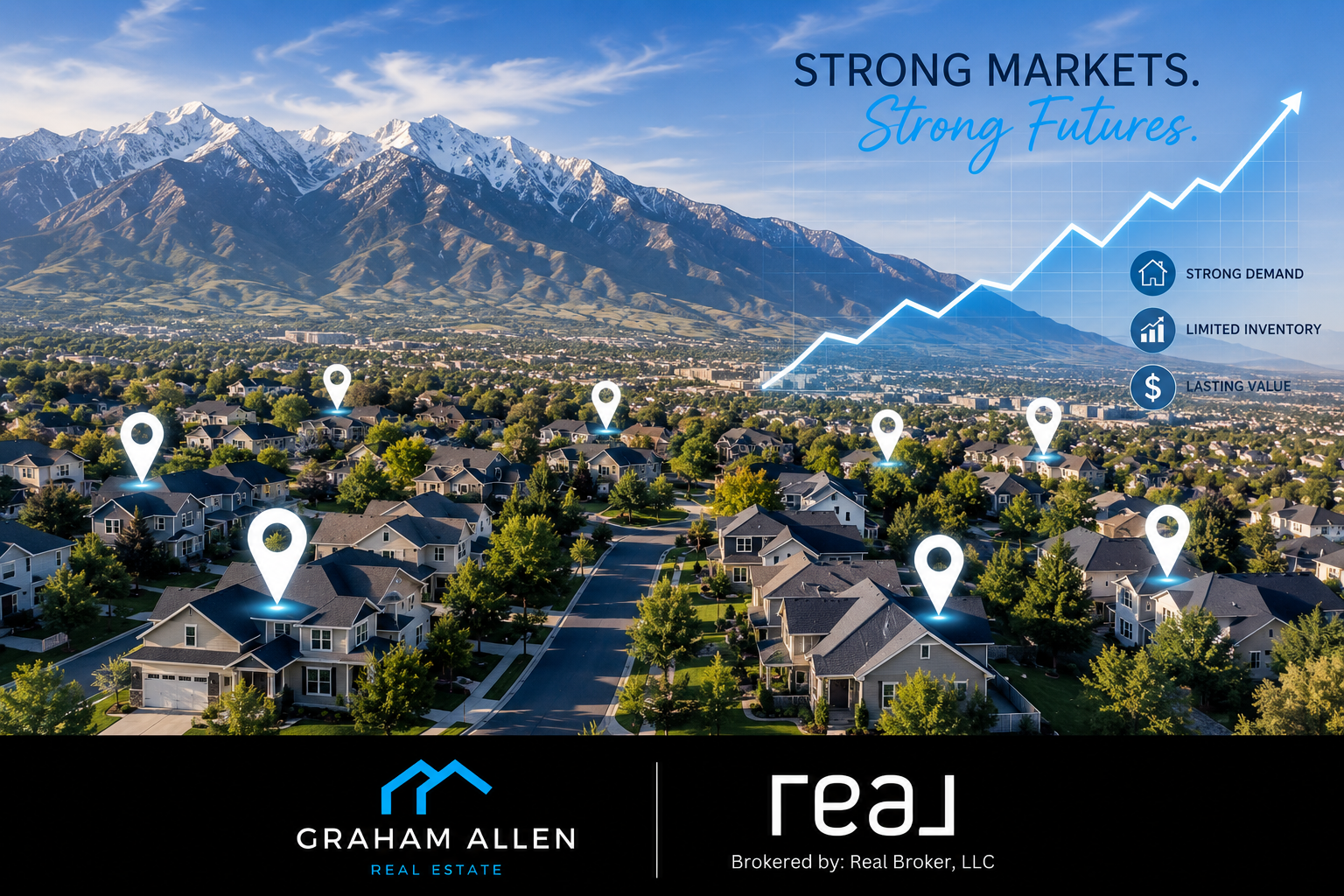
Population growth, limited inventory, strong communities, and ongoing demand continue to shape housing conditions throughout the state.
For buyers, opportunities still exist.
For sellers, preparation and pricing remain critical.
And for everyone, understanding local market conditions is far more valuable than relying solely on national headlines.
If you're considering buying, selling, or simply want to understand how today's market affects your goals, the Graham Allen Group is here to help you navigate the process with confidence and clarity.
Recent Posts