
What First-Time Home Buyers in Utah Need to Know Before Purchasing a Home

Buying your first home is exciting, but it can also feel overwhelming.
For most people, purchasing a home is the largest financial decision they will ever make. Between mortgages, inspections, earnest money, appraisals, and closing costs, it's easy to feel like you're learning an entirely new language.
The good news is that buying your first home doesn't have to be complicated when you understand the process.
If you're considering purchasing your first home in Utah, here's what you need to know before starting your search.
Start With Your Budget, Not Zillow
One of the most common mistakes first-time buyers make is beginning their search online before determining what they can comfortably afford.
It's easy to fall in love with homes that may not fit your budget.
Before looking at properties, take time to evaluate:
-
Your monthly income
-
Existing debt obligations
-
Savings available for down payment
-
Savings available for closing costs
-
Emergency reserves after closing
Just because a lender approves a certain amount doesn't necessarily mean that's the amount you should spend.
Your mortgage payment should fit comfortably within your overall financial goals and lifestyle.
Get Pre-Approved Before You Shop
A mortgage pre-approval is one of the most important first steps in the home-buying process.
A pre-approval helps you:
-
Understand your purchasing power
-
Strengthen future offers
-
Identify potential financing issues early
-
Shop with confidence
Sellers are much more likely to take your offer seriously when it is accompanied by a strong pre-approval letter from a reputable lender.
In competitive situations, a pre-approved buyer often has an advantage over someone who hasn't started the financing process.
Understand What Your Monthly Payment Includes
Many first-time buyers focus only on the mortgage amount.
However, your total monthly housing payment may include:
-
Principal
-
Interest
-
Property taxes
-
Homeowners insurance
-
Mortgage insurance (if applicable)
-
HOA fees (if applicable)
Understanding the complete monthly payment helps prevent surprises after closing.
When evaluating homes, always consider the total monthly cost rather than just the purchase price.
Save for More Than Just the Down Payment
Many buyers spend years focusing exclusively on saving for a down payment.
While the down payment is important, there are additional expenses to consider.
These may include:
-
Earnest money deposit
-
Home inspection
-
Appraisal fees
-
Closing costs
-
Moving expenses
-
Utility deposits
-
Immediate home improvements
Having a financial cushion after closing can help make the transition into homeownership much less stressful.
Choose the Right Neighborhood
You can update flooring.
You can repaint walls.
You can remodel a kitchen.
You cannot change the location.
That's why choosing the right neighborhood is one of the most important decisions you'll make during the buying process.
Consider factors such as:
-
Commute times
-
School boundaries
-
Nearby shopping and restaurants
-
Future development plans
-
Access to recreation
-
Community amenities
Spend time exploring neighborhoods at different times of day before making a decision.
Don't Skip the Home Inspection
A home inspection is one of the most valuable investments you can make during a transaction.
Even homes that appear perfect can have hidden issues.
A professional inspection can identify concerns involving:
-
Roofing
-
Plumbing
-
Electrical systems
-
HVAC systems
-
Foundation issues
-
Drainage concerns
-
Safety hazards
The goal of an inspection isn't necessarily to find reasons not to buy the home.
Instead, it provides valuable information so you can make an informed decision.
What Is Earnest Money?
Many first-time buyers hear the term "earnest money" and aren't sure what it means.
Earnest money is a deposit submitted with your offer that demonstrates your commitment to purchasing the home.
Think of it as a good-faith deposit.
The funds are typically applied toward your purchase at closing.
Specific terms vary depending on the contract, so it's important to understand deadlines and contingencies associated with your earnest money deposit.
Understanding the Appraisal Process
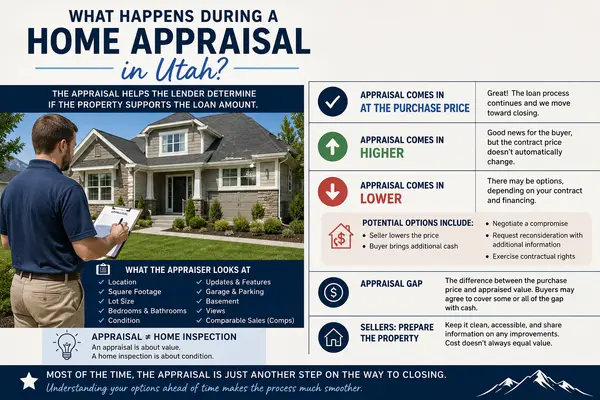
If you're financing your purchase, your lender will typically require an appraisal.
An appraisal is an independent opinion of the home's value.
The lender uses the appraisal to help ensure the property is worth the amount being financed.
While buyers sometimes confuse inspections and appraisals, they serve very different purposes.
An inspection evaluates condition.
An appraisal evaluates value.
Both are important components of the transaction.
Be Prepared to Act Quickly
The Utah real estate market can move quickly.
Desirable homes often generate significant interest shortly after hitting the market.
This doesn't mean buyers should rush into decisions.
However, it does mean preparation matters.
Having a pre-approval, understanding your budget, and working with an experienced agent allows you to act confidently when the right opportunity presents itself.
Avoid Common First-Time Buyer Mistakes
Many first-time buyers unknowingly create challenges during the transaction process.
Common mistakes include:
Making Major Purchases
Avoid buying vehicles, furniture, or other large-ticket items before closing.
Large purchases can affect your debt-to-income ratio and potentially impact financing approval.
Opening New Credit Accounts
New credit activity can create complications during the underwriting process.
It's generally best to avoid opening new accounts until after closing.
Changing Jobs
Employment changes can affect loan qualification requirements.
Always consult your lender before making significant employment decisions during a transaction.
Draining Your Savings
Many buyers focus entirely on the down payment and leave themselves with little cash after closing.
Maintaining emergency reserves is an important part of responsible homeownership.
Homeownership Is a Long-Term Investment
Real estate should generally be viewed as a long-term investment.
While markets fluctuate over time, homeownership offers benefits beyond potential appreciation.
These benefits often include:
-
Building equity
-
Greater stability
-
Personalization opportunities
-
Pride of ownership
-
Potential tax advantages
Buying your first home isn't just about finding a place to live.
It's about creating a foundation for your future.
Why Working With the Right Agent Matters
A great real estate agent does far more than unlock doors.
They help you:
-
Understand market conditions
-
Navigate negotiations
-
Interpret contracts
-
Coordinate inspections
-
Meet critical deadlines
-
Avoid costly mistakes
For first-time buyers, having an experienced advocate throughout the process can make a tremendous difference.
Final Thoughts
Buying your first home can feel intimidating, but it doesn't have to be.
When you understand the process, prepare financially, and surround yourself with the right professionals, homeownership becomes much more achievable.
The key is starting with a solid plan, realistic expectations, and expert guidance along the way.
If you're considering purchasing your first home in Utah, the Graham Allen Group would love to help you navigate the process and make your first home purchase a successful one.
Recent Posts