
What Happens After Your Offer Is Accepted? A Step by Step Guide
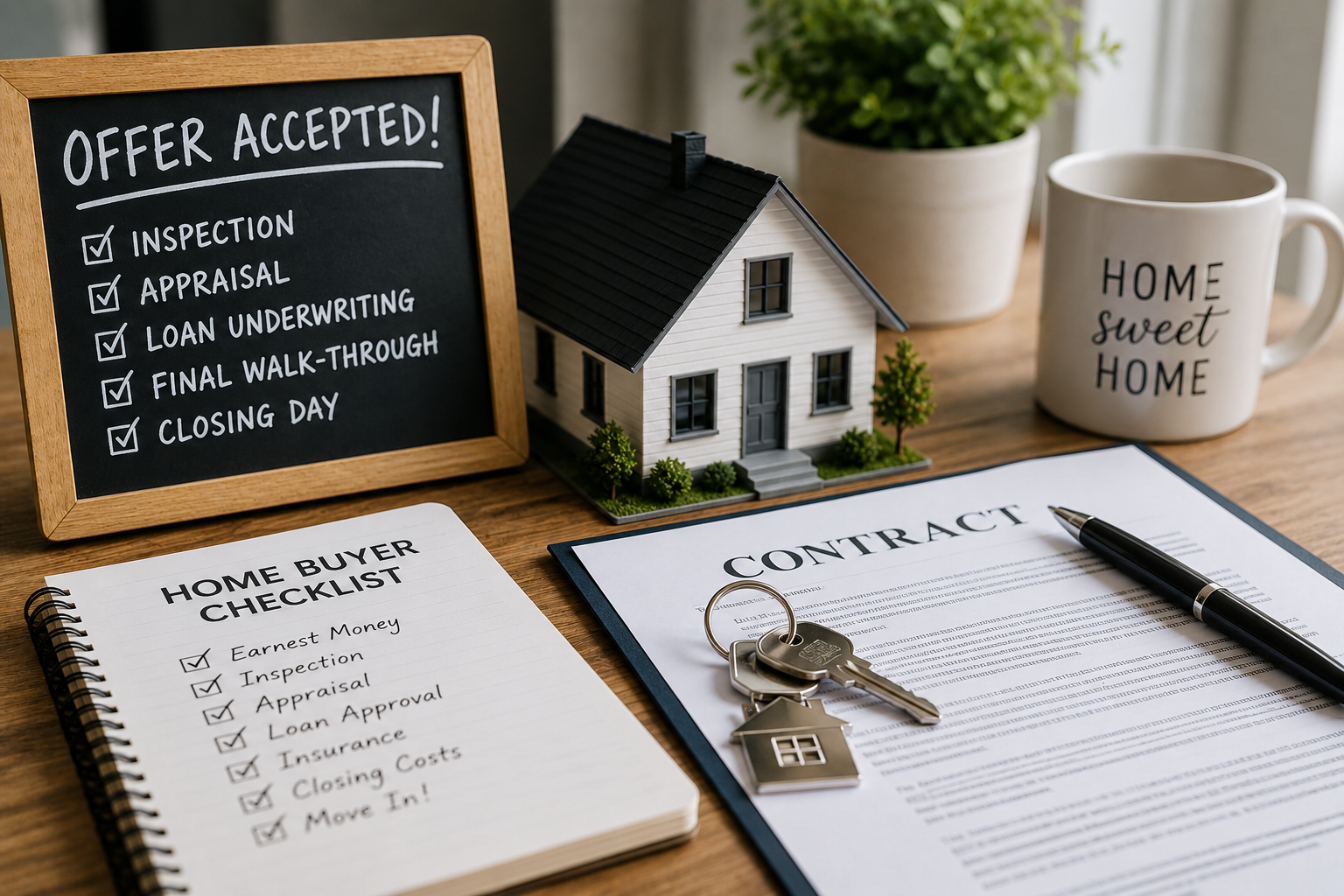
Finding the right home and hearing the words, "Your offer has been accepted," is an exciting moment. After weeks or even months of searching, it can feel like the hardest part is over.
In reality, you've reached the beginning of the next phase of the home buying process.
From earnest money and inspections to appraisals and closing day, there are several important steps that happen between an accepted offer and getting the keys. Understanding what to expect can make the process feel much less overwhelming and help you move toward closing with confidence.
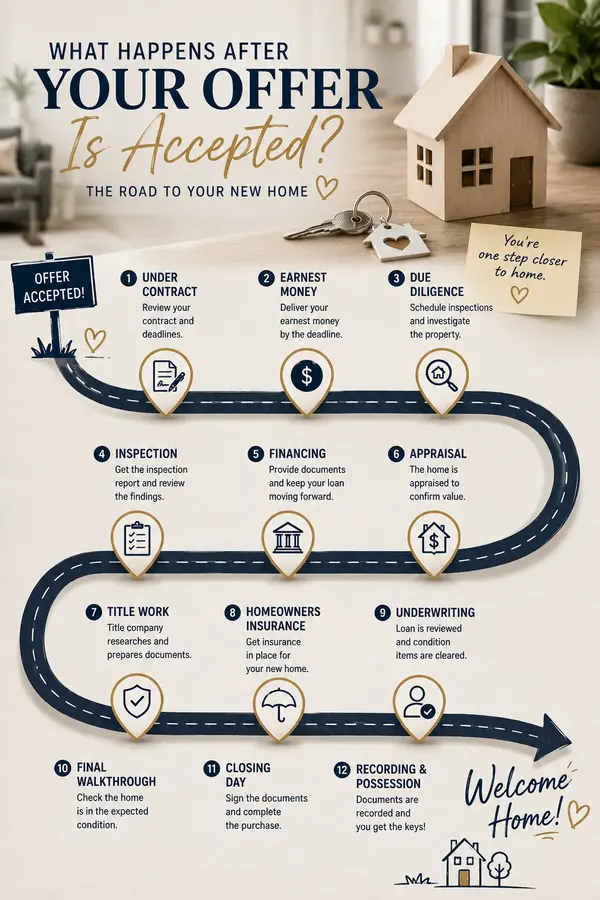
Here's a step by step look at what happens after your offer is accepted.
Your Home Goes Under Contract
Once the seller accepts your offer, the home officially goes under contract.
This means both parties have agreed to the terms of the purchase and are working toward closing. While the home is no longer actively being marketed to other buyers, there are still several important milestones that need to happen before the sale becomes final.
This is when your Realtor begins coordinating with the lender, title company and everyone else involved in the transaction.
Earnest Money Is Deposited
If your offer included earnest money, you'll submit that deposit according to the timeline outlined in your contract.
Earnest money shows the seller you're committed to purchasing the home. Rather than going directly to the seller, the funds are typically held by a neutral third party until closing.
If everything goes as planned, your earnest money is generally applied toward your down payment or closing costs.
Schedule the Home Inspection
One of the first major steps after going under contract is scheduling the home inspection.
A licensed home inspector will evaluate the home's major systems and components, including:
• Roof
• Foundation
• Plumbing
• Electrical
• Heating and cooling systems
• Appliances
• Windows and doors
The purpose of the inspection isn't to find a perfect home. Every home has minor issues.
Instead, the inspection helps you better understand the property's condition and identify any significant concerns before moving forward.
Review the Inspection Report
After the inspection, you'll receive a detailed report outlining the inspector's findings.
Some items may simply involve routine maintenance, while others could require repairs or additional evaluation.
Depending on what the inspection reveals, you may decide to:
Ask the seller to complete certain repairs.
Request a credit toward your closing costs.
Negotiate another solution.
Move forward without requesting repairs.
Your Realtor will help you understand your options and negotiate on your behalf if necessary.
Your Loan Moves Through Underwriting
While inspections are taking place, your lender continues processing your mortgage.
During underwriting, the lender verifies your income, employment, assets and financial information to ensure everything meets the loan requirements.
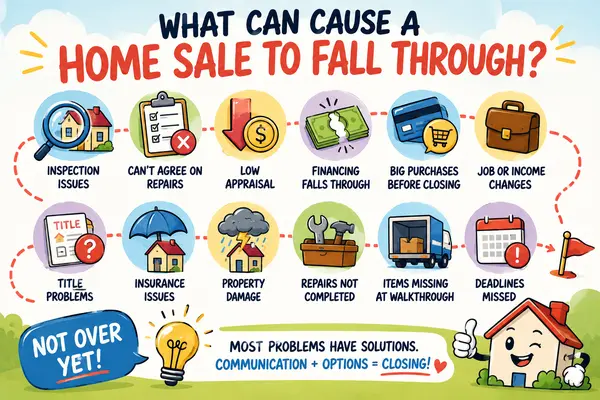
This is one reason it's important to avoid making major financial changes after your offer is accepted.
Opening new credit accounts, financing large purchases or changing jobs can sometimes delay your loan approval.
The Home Appraisal
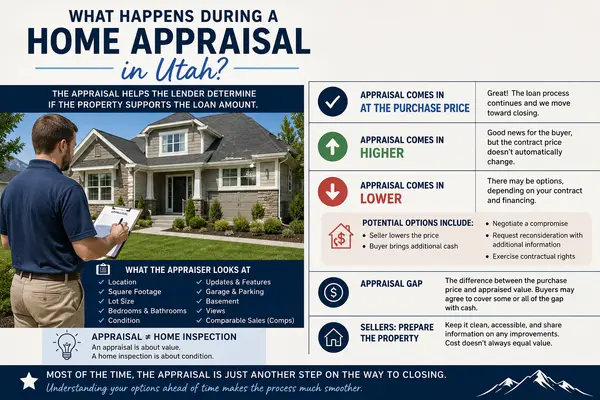
If you're financing the purchase, your lender will order an appraisal.
An appraiser evaluates the home's market value using recent comparable sales and the property's overall condition.
The appraisal protects both you and the lender by helping ensure the home's value supports the purchase price.
In many cases, the appraisal comes in at or above the agreed upon price.
If it comes in lower, your Realtor can help explain your available options and guide you through the next steps.
Final Loan Approval
Once underwriting has reviewed all required documents and the appraisal has been completed, your lender issues final loan approval.
At this point, you're getting very close to closing.
Your lender will also provide your Closing Disclosure, which outlines your final loan terms, monthly payment and closing costs.
Review these documents carefully and ask questions if anything is unclear.
Complete Your Final Walk Through
Shortly before closing, you'll complete a final walk through of the home.
This isn't another inspection.
Instead, it's an opportunity to verify that:
The home is in the agreed upon condition.
Any negotiated repairs have been completed.
No unexpected damage has occurred since your last visit.
Included appliances and fixtures are still present.
Most final walk throughs are quick, but they provide valuable peace of mind before signing the final paperwork.
Closing Day
Closing day is when everything comes together.
You'll sign your loan documents, complete any remaining paperwork and pay your required closing costs.
Once all documents have been signed and the transaction has officially funded and recorded, ownership transfers to you.
Then comes one of the best moments in the entire process.
Getting the keys to your new home.
Final Thoughts
The time between an accepted offer and closing may seem busy, but every step is designed to protect both the buyer and the seller while ensuring a successful transaction.
Having an experienced Realtor by your side makes the process much easier. You'll always know what's happening next, what deadlines are approaching and who is coordinating each part of the transaction.
If you're thinking about buying a home in Utah, the Graham Allen Group is here to guide you through every step of the journey. From your very first showing to the moment you receive your keys, we'll be there to help make the process as smooth and stress free as possible.
Recent Posts