How Much Earnest Money Do You Need When Buying a Home in Utah?

You found the house.
You're ready to write an offer.
Then your real estate agent asks:
"How much earnest money do you want to offer?"
And if you're a first time buyer, your immediate response might be:
"What exactly is earnest money?"
Earnest money is one of those real estate terms buyers hear constantly without always understanding what it means, where the money goes or whether they ever get it back.
So let's break down earnest money when buying a home in Utah and how to decide what amount makes sense for your offer.
What Is Earnest Money?
Earnest money is money a buyer agrees to provide as part of a real estate purchase contract.
Think of it as demonstrating that you're serious about moving forward with the transaction.
The amount, deadline and terms surrounding earnest money are addressed in the purchase agreement.
It isn't simply an extra fee you pay for buying a house.
If the transaction closes, the earnest money is generally accounted for as part of the funds involved in your purchase.
Is Earnest Money Required in Utah?
The amount of earnest money is something that can be negotiated as part of the offer.
There isn't one universal dollar amount that every Utah home buyer must use for every transaction.
The appropriate amount can depend on factors such as the purchase price, market conditions, competition for the property and the overall structure of your offer.
That's why your agent may recommend different amounts for different properties.
So How Much Earnest Money Should You Offer?
There's no magic number.
In one transaction, a certain amount may be perfectly reasonable.
In another, the buyer may choose a larger deposit to strengthen the offer.
Instead of asking only, "What's normal?" ask:
"What amount makes sense for this specific offer?"
We want to consider the home's price, competing buyer activity, your available funds and the other terms you're offering.
Does More Earnest Money Make an Offer Stronger?
Potentially.
A larger earnest money deposit can communicate that a buyer is serious about completing the purchase.
But sellers don't evaluate earnest money in isolation.
A strong offer might also include an attractive purchase price, solid financing, favorable timelines and other competitive terms.
Putting down a huge earnest money deposit doesn't automatically make a weak offer great.
It's one piece of the bigger picture.
Where Does the Earnest Money Go?
Earnest money is typically held according to the terms of the transaction rather than being handed directly to the seller to spend.
Your contract and transaction documents will identify how the earnest money is handled.
Make sure you know where the funds are supposed to be delivered and the deadline for doing so.
Never send money based solely on an unexpected email.
Verify payment or wiring instructions through trusted contact information.
Does Earnest Money Go Toward the Purchase Price?
This is a common question.
If the transaction successfully closes, your earnest money is generally credited as part of the funds you've already contributed toward the transaction.
For example, imagine your total amount due from you at closing is calculated and you've already deposited earnest money.
That deposit is taken into account rather than simply disappearing as an additional charge.
Your lender and settlement company can show you exactly how the credit appears in your specific transaction.
Is Earnest Money the Same as a Down Payment?
No.
Earnest money and your down payment aren't the same thing.
Your down payment is part of how you're financing the purchase of the home.
Earnest money is a deposit associated with your purchase contract.
The earnest money may ultimately be credited toward the amount you need to bring into the transaction, but the terms mean different things.
Is Earnest Money the Same as Closing Costs?
No.
Closing costs are expenses associated with completing the purchase and obtaining financing.
Depending on your transaction, those may include lender charges, title related expenses, prepaid items and other costs.
Earnest money isn't itself simply another closing cost.
However, because it's generally credited in the transaction if you close, it can reduce the remaining amount of cash you need to provide at closing.
Can You Get Your Earnest Money Back?
Sometimes.
This is where the contract becomes extremely important.
Whether earnest money is refundable depends on the terms of your agreement, the applicable deadlines and why the transaction isn't closing.
Utah purchase contracts may contain buyer protections and deadlines related to things such as due diligence, financing and appraisal conditions.
If a buyer properly exercises a contractual right within the required timeframe, the treatment of earnest money may be different than if the buyer simply decides not to close after protections have expired.
Never assume you'll automatically get your earnest money back.
But also don't assume the seller automatically gets it whenever a transaction fails.
Read the contract.
What Happens During Due Diligence?
The due diligence period is generally when the buyer investigates the property according to the contract.
This may include a professional home inspection and other evaluations.
If the buyer discovers something concerning, their options depend on the terms and deadlines in the purchase agreement.
This is one reason your due diligence deadline matters so much.
If you intend to exercise a contractual right, timing matters.
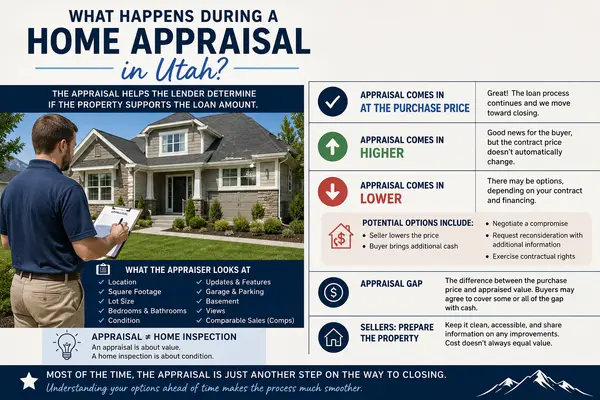
What Happens if the Appraisal Comes in Low?
If your financing involves an appraisal and the property doesn't appraise at the expected value, what happens next depends on your contract.
Your offer may contain terms addressing appraisal related protections or an appraisal gap.
Those terms can affect your options and potentially the treatment of earnest money.
This is why we talk about appraisal strategy before submitting the offer rather than waiting until the appraisal report arrives.
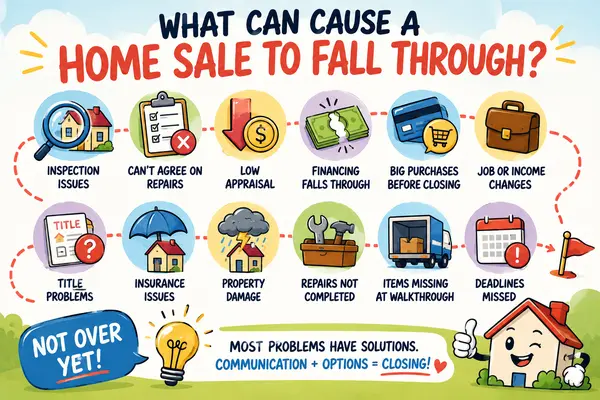
What Happens if Your Financing Falls Through?
Again, it depends on the contract.
Financing related provisions and deadlines can affect a buyer's rights if they're unable to obtain the necessary loan.
This is also why buyers should stay in close communication with their lender throughout the transaction.
If something changes with your financing, tell your agent immediately.
Waiting until the day before closing can severely limit your options.
Can Earnest Money Become Nonrefundable?
Depending on the terms negotiated in the contract, a buyer may agree to make some or all of the earnest money nonrefundable under certain circumstances.
This can potentially make an offer more attractive to a seller.
But it also creates additional financial risk for the buyer.
If you're considering nonrefundable earnest money, make sure you understand exactly when the money becomes nonrefundable and what happens if you don't complete the purchase.
Don't use aggressive offer terms simply because you're trying to win the house.
Understand the risk you're accepting.
More Earnest Money Means More Money at Risk
Let's say one buyer offers $2,000 in earnest money and another offers $10,000.
If both amounts are subject to the same protections, the second buyer has simply put more money into the transaction.
But if those protections expire or the money becomes nonrefundable under the agreement, the potential financial exposure is very different.
Never offer more earnest money than you're comfortable putting at risk under the terms you're signing.
Earnest Money Can Be Part of Your Offer Strategy
When you're competing with other buyers, earnest money can be one tool we consider.
But it's not the only one.
We might also look at:
- Purchase price
- Financing strength
- Due diligence terms
- Appraisal terms
- Closing timeline
- Seller concessions
- Possession
- Other contractual terms
The strongest offer isn't necessarily the one with the largest earnest money deposit.
It's the offer that makes sense as a complete package.
Don't Forget the Deadline
One of the easiest earnest money mistakes to avoid is missing the delivery deadline.
Once your offer is accepted, know exactly:
- How much you're delivering
- Where it needs to go
- How it should be delivered
- When it's due
Your agent should help coordinate this, but it's your money and your contract.
Pay attention to the deadline.
Watch Out for Wire Fraud
Any time money is moving during a real estate transaction, be cautious.
Scammers may impersonate real estate agents, lenders or title companies.
If you receive instructions telling you where to send earnest money or closing funds, verify them using contact information you know is legitimate.
If you receive an unexpected message saying the instructions have changed, don't send anything until you've independently confirmed the change.
Don't Be Afraid to Ask Questions
Earnest money shouldn't feel mysterious.
Before submitting an offer, you should understand:
What amount are you offering?
When is it due?
Where will it be held?
Under what circumstances could it be refundable?
When could it become nonrefundable?
What happens to it at closing?
If you don't understand those answers, ask before signing.
The Right Amount Depends on the Offer
There's no single earnest money amount that's right for every Utah home purchase.
The amount should be considered alongside the price of the home, the market, your finances and the other terms of your offer.
Sometimes increasing earnest money can help demonstrate commitment.
Sometimes there are better ways to strengthen an offer.
The important thing is understanding exactly what you're agreeing to and how much money could potentially be at risk.
If you're buying a home in Northern Utah or anywhere along the Wasatch Front, a good offer strategy isn't about making every term as aggressive as possible.
It's about making your offer competitive while still protecting the things that matter to you.
And earnest money is one of those pieces we want to get right.
Recent Posts