
What Happens After Your Offer Is Accepted on a House?
You did it.
After touring homes, comparing properties and writing an offer, you finally get the call you've been waiting for.
Your offer was accepted.
It's exciting, but you're not a homeowner quite yet.
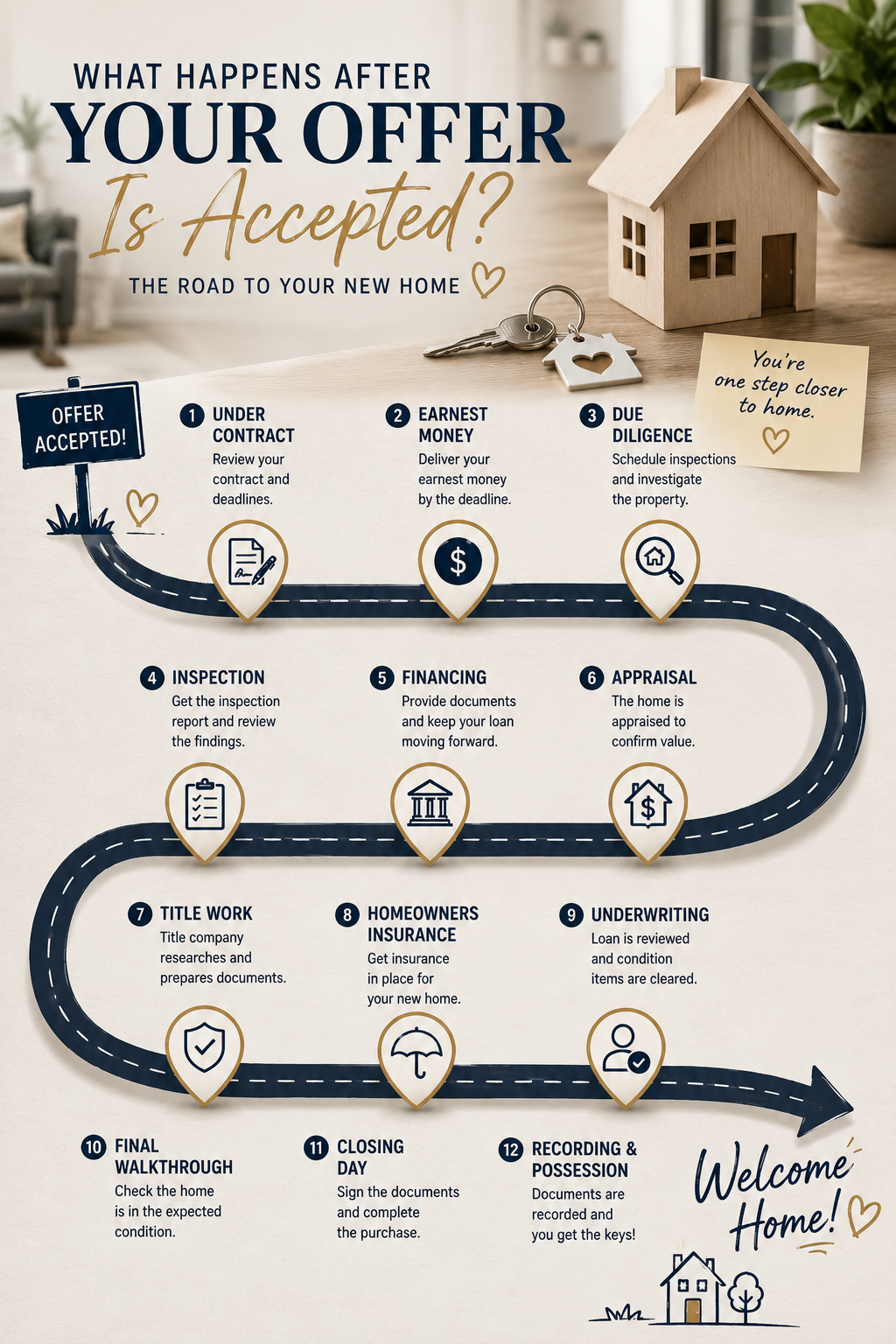
An accepted offer starts the next phase of the home buying process. Between going under contract and getting the keys, there are several important steps involving your earnest money, due diligence, financing, appraisal, title work and closing.
Here's what Utah home buyers can generally expect after their offer is accepted.
Step 1: You're Under Contract
Once the appropriate parties have agreed to and signed the purchase contract, the property is generally considered under contract.
Now the deadlines in your agreement become extremely important.
Your contract may contain dates related to earnest money, due diligence, financing and appraisal conditions, settlement and other obligations.
Save those dates.
Your real estate agent should help you understand what's coming next, but you should know your deadlines too.
Step 2: Earnest Money Is Delivered
Your contract will specify the amount of earnest money you've agreed to provide and the applicable deadline.
Earnest money is money you provide as part of the transaction to demonstrate your commitment to purchasing the property.
What happens to that money if the transaction doesn't close depends on the contract and circumstances.
Don't assume earnest money is automatically refundable or automatically forfeited.
The terms matter.
Step 3: Your Due Diligence Begins
Due diligence is your opportunity to investigate the property according to your contract.
This is when buyers commonly arrange a professional home inspection.
Depending on the home and your concerns, you may also choose to investigate additional areas.
That could include things such as:
- Roof condition
- HVAC systems
- Plumbing
- Electrical
- Sewer or septic systems when applicable
- Radon
- Structural concerns
- Property boundaries
- HOA information
- Other property specific issues
You don't necessarily need every inspection imaginable.
The goal is to gather enough information to make an informed decision about the property.
Step 4: Review the Seller Disclosures
Utah buyers may receive seller property condition disclosures as part of the transaction when applicable.
Read them.
Don't just sign the acknowledgment and move on.
Seller disclosures can contain important information about the property, including known issues, repairs, systems and other conditions.
If something in the disclosures raises a question, investigate it during your due diligence period.
Step 5: Complete the Home Inspection
Your inspector will evaluate accessible components of the property and provide a report of their findings.
And here's something important for first time buyers:
Your inspection report will probably be long.
That doesn't automatically mean the house is falling apart.
Inspectors document what they observe, including minor items.
Focus on understanding the property rather than becoming overwhelmed by the number of pages.
If something significant is discovered, discuss your options with your agent and appropriate professionals.
Step 6: Decide How to Handle Inspection Findings
Depending on your contract and circumstances, inspection findings may lead to additional investigation or discussions about the property.
You may decide you're comfortable moving forward.
You may seek additional information from a specialist.
There may be situations where the parties negotiate certain matters.
Your available options depend on your contract, so pay close attention to your deadlines.
Step 7: Keep Your Loan Moving
While you're investigating the house, your lender is working on your financing.
Respond quickly when they ask for documents.
They may need updated bank statements, income documentation, insurance information or other financial records.
And during this period, try not to make major financial changes without talking to your lender first.
This is probably not the time to finance a new truck, open three credit cards or quit your job without telling anybody involved in your loan.
Your lender qualified you based on a particular financial picture.
Try not to dramatically change that picture before closing.
Step 8: The Appraisal May Be Ordered
If your financing requires an appraisal, your lender will generally coordinate that process.
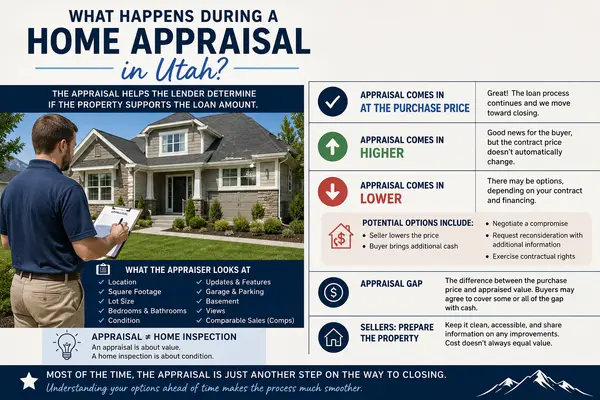
The appraiser develops an independent opinion of the property's value.
If the value supports what is needed for the transaction, the financing process continues.
If it doesn't, your options depend on your contract, financing and appraisal terms.
This is why appraisal strategy matters when you initially write your offer.
Step 9: Title Work Happens Behind the Scenes
While you're focused on inspections and financing, the title company is doing its own work.
The title process may include researching public records and identifying matters affecting ownership of the property.
You may receive a title commitment outlining certain requirements and exceptions.
Read it.
If something doesn't make sense, ask questions before closing.
Step 10: Get Homeowners Insurance
Your lender may require evidence of homeowners insurance before completing your loan.
Don't wait until the morning of closing to figure this out.
Shop for coverage early enough to understand the cost and make sure the property can be appropriately insured.
Insurance costs can also affect your monthly housing expense, so this is an important part of your overall budget.
Step 11: Your Loan Goes Through Underwriting
Underwriting is where the lender evaluates the loan file to determine whether it meets the applicable requirements.
The underwriter may request additional documentation or clarification.
That's normal.
It doesn't automatically mean something is wrong.
If your lender asks for something, send it as quickly as possible.
The faster questions are resolved, the easier it is to keep the transaction moving.
Step 12: Don't Change Your Finances Before Closing
This deserves repeating.
You've been approved for the mortgage based on your financial situation.
Until the transaction is complete, avoid making significant financial moves without discussing them with your lender.
That includes things like:
- Financing furniture
- Buying a vehicle
- Opening new credit accounts
- Making large unexplained deposits
- Changing employment
- Taking on significant new debt
You may be excited to furnish the new house.
Wait until your lender tells you it's safe.
The couch can survive another week.
Step 13: Review Your Closing Information
As closing approaches, you'll receive important information regarding the financial side of your purchase.
Review the documents carefully.
Make sure you understand how much money you'll need, where the funds are going and what you're signing.
Ask questions before closing day if something doesn't make sense.
Step 14: Be Extremely Careful With Wiring Instructions
Real estate wire fraud is serious.
Scammers may impersonate real estate agents, lenders or title companies and send fake wiring instructions.
Never rely solely on an unexpected email telling you where to send your closing funds.
Verify wiring instructions directly with your title company using trusted contact information.
If you receive changed wiring instructions, stop and independently verify them before sending money.
Step 15: Complete Your Final Walkthrough
Shortly before closing, you'll typically have an opportunity to complete a final walkthrough.
This isn't another inspection.
You're generally checking that the property is in the expected condition, agreed upon repairs have been addressed and included items are still present.
Look for significant changes or new damage.
If something concerns you, tell your real estate agent before closing.
Step 16: Closing Day
Now we get to the part everybody has been waiting for.
You'll sign the documents required to complete your purchase.
If you're financing the home, expect plenty of loan paperwork.
Your settlement or title company will help facilitate the signing and closing process.
But signing doesn't necessarily mean you immediately own the home or receive possession.
There may still be funding and recording requirements.
Step 17: Recording and Possession
Certain documents related to the transfer of the property are recorded with the appropriate county.
Your contract determines when possession occurs.
Sometimes buyers expect to walk out of signing with keys in hand, but that's not always how the timing works.
Know when you're actually entitled to possession before scheduling movers or showing up with a truck full of furniture.
Then You Get to Go Home
Once the transaction has completed and possession occurs according to your agreement, you've made it.
The house is yours.
Going under contract is exciting, but there's still a lot that needs to happen between an accepted offer and closing day.
The easiest way to navigate that period is to understand the process before you're in it.
Know your deadlines.
Ask questions.
Respond quickly to your lender.
Complete your due diligence.
Review your title information.
And don't buy the new living room furniture on credit three days before closing.
If you're buying a home in Northern Utah or anywhere along the Wasatch Front, having an experienced team helping coordinate each step can make the process much less overwhelming.
An accepted offer isn't the finish line.
But it does mean you're officially on your way home.
Recent Posts