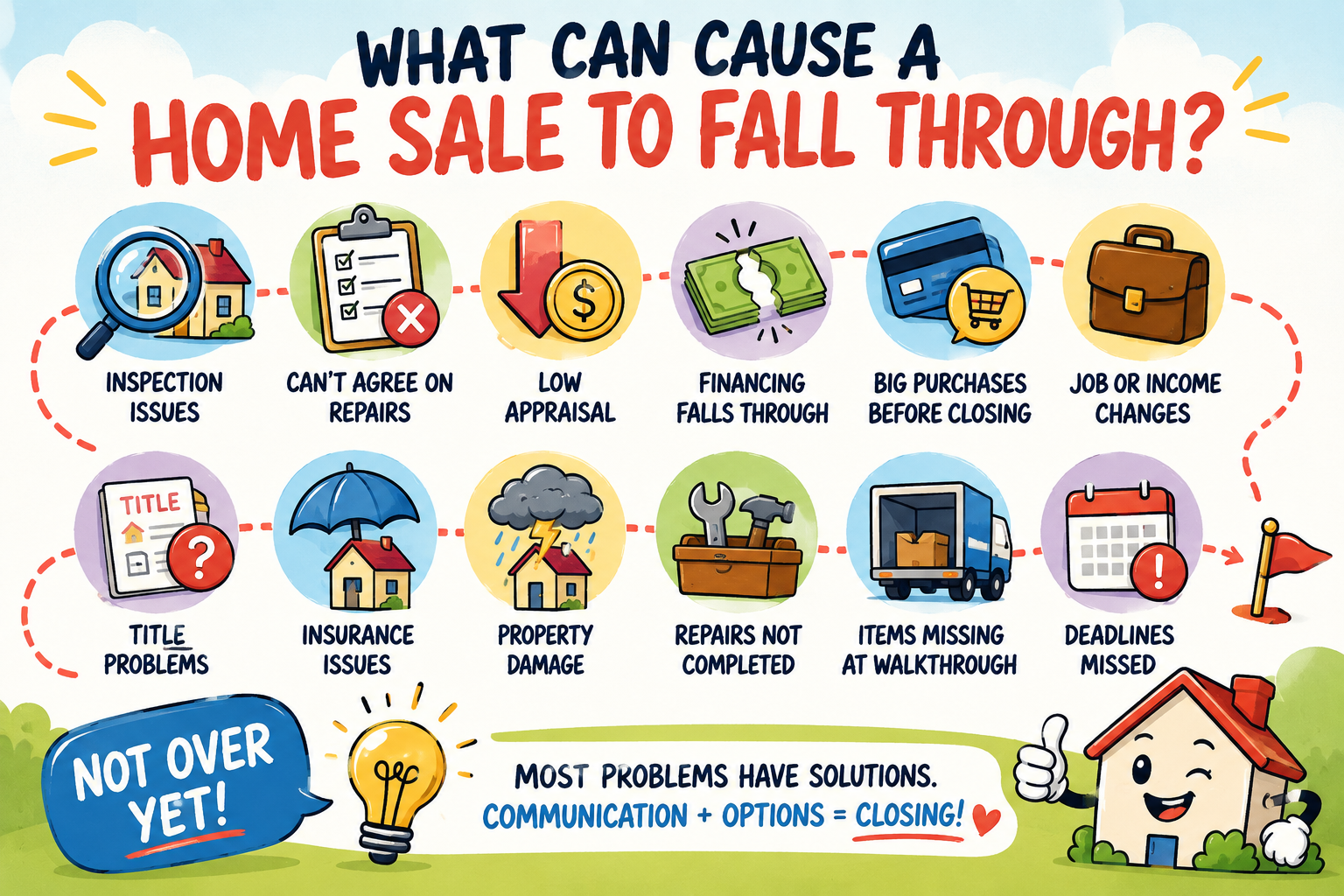
What Can Cause a Home Sale to Fall Through?
Your home is under contract.
You accepted an offer, the buyer is moving forward and you're already thinking about closing day.
Then something happens.
The deal falls apart.
It's one of the most frustrating possibilities for both buyers and sellers, but an accepted offer doesn't guarantee a home will make it all the way to closing.
There are several steps between going under contract and officially completing the sale. Problems with inspections, financing, appraisal, title or even the buyer's circumstances can potentially derail a transaction.
The good news is that many problems don't automatically mean the sale is over.
Here's what Utah buyers and sellers should know about some of the common reasons a home sale can fall through.
The Home Inspection Reveals a Major Problem
One of the first major hurdles after going under contract is often the buyer's due diligence.
A professional inspection may reveal problems the buyer didn't know about when they made the offer.
Maybe there's significant water damage.
Maybe the roof has a serious issue.
Maybe there are electrical concerns.
Maybe something structural needs additional evaluation.
Depending on the contract and applicable deadlines, the buyer may have options after discovering problems during due diligence.
Sometimes the parties find a solution.
Other times the buyer may decide the property isn't right for them.
The Buyer and Seller Can't Agree on Repairs
Not every inspection issue kills a transaction.
Sometimes the problem is what happens afterward.
A buyer may want certain concerns addressed.
The seller may not agree.
If the parties can't find terms they're both comfortable with and the buyer still has applicable contractual rights, the transaction may not continue.
This is why both sides should try to keep perspective during repair discussions.
A small issue doesn't always need to become the reason an otherwise good transaction ends.
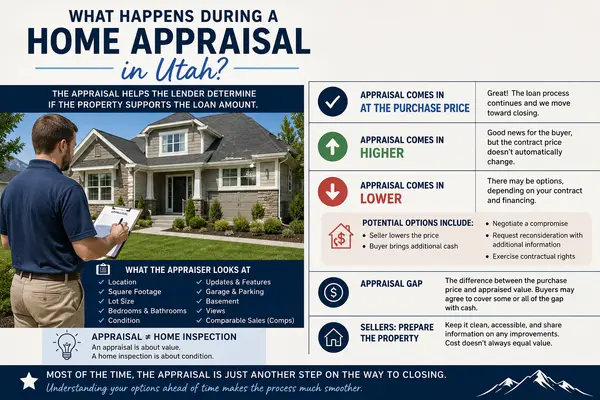
The Appraisal Comes in Low
If the buyer is financing the purchase, an appraisal may be required.
Let's say the contract price is $500,000 but the appraisal comes in at $480,000.
Now there's a $20,000 difference.
Depending on the contract and financing, the parties may have several possibilities.
The seller could agree to reduce the price.
The buyer might bring additional cash.
The parties could negotiate somewhere in the middle.
There may also be an appropriate process for submitting relevant information for reconsideration through the lender.
But if a solution can't be reached and the buyer has applicable appraisal protections, the transaction could potentially terminate.
The Buyer's Financing Falls Through
A buyer can be preapproved and still encounter financing problems before closing.
Preapproval isn't the same as final loan approval.
The lender will continue reviewing the buyer's finances throughout the transaction.
Problems could potentially arise because of changes involving income, employment, debt, credit, documentation or other underwriting requirements.
This is why buyers should stay in close communication with their lender until closing is complete.
The Buyer Makes a Big Purchase Before Closing
You finally get a house under contract.
Naturally, you want furniture for it.
Maybe a new couch.
A refrigerator.
A truck to haul everything.
So you open a new credit card or finance a major purchase.
Bad timing.
Taking on new debt before closing can potentially change the financial information the lender used to qualify you.
Buyers should talk with their lender before making significant financial moves while under contract.
Buy the couch after you've confirmed it's safe to do so.
The Buyer's Employment Changes
Employment changes during a transaction can also affect financing.
Maybe the buyer changes jobs.
Their hours change.
Their income changes.
They move from salaried employment to another compensation structure.
Whether a particular change affects the loan depends on the circumstances and lender requirements.
The important thing is communication.
If something changes, tell the lender immediately rather than hoping nobody notices.
Something Appears in the Title Work
Title research may uncover an issue that needs to be addressed before closing.
There could be a lien.
An ownership question.
A judgment affecting a party.
An issue involving a previous transfer.
A recorded matter requiring additional attention.
Many title issues can be resolved.
But some take time.
If a significant issue can't be addressed within the transaction timeline, it can delay or potentially prevent the closing.
The Buyer Can't Obtain Homeowners Insurance
Insurance is another part of the transaction buyers sometimes overlook.
If the buyer's lender requires homeowners insurance, the buyer needs to obtain acceptable coverage.
Certain property conditions or claims histories may affect availability or cost.
This is one reason buyers should investigate insurance before the very end of the transaction.
You don't want to discover a major insurance problem the day before closing.
The Home Is Damaged Before Closing
A lot can happen between the day the contract is signed and closing.
A pipe could burst.
A storm could damage the property.
A fire could occur.
Something could happen while the seller is moving out.
If the property suffers significant damage before closing, the contract and circumstances will determine what happens next.
This is another reason the final walkthrough matters.
An Agreed Upon Repair Isn't Completed
Sometimes the parties agree that certain work will be completed before closing.
Then the final walkthrough happens and the repair isn't finished.
Or it was completed differently than expected.
This doesn't necessarily mean the entire transaction is over.
But it can create a last minute issue that needs to be addressed.
Clear written agreements and good communication can help prevent misunderstandings.
The Seller Removes Something That Was Supposed to Stay
The buyers arrive for the final walkthrough.
The refrigerator is gone.
Or the seller removed a fixture that was supposed to remain.
Or another specifically included item disappeared during the move.
Now we've got a problem.
The purchase contract determines what is included with the property.
Both buyers and sellers should understand those terms before moving day.
The Buyer Needs to Sell Another Home First
Some purchases depend on the buyer selling their current home.
That creates another transaction that needs to succeed.
If the buyer's home doesn't sell or their transaction falls apart, it could affect their ability to purchase the next property depending on the contract and financing.
This doesn't mean sellers should automatically reject contingent buyers.
It simply means there are additional moving pieces to consider.
Deadlines Get Missed
Real estate contracts contain deadlines for a reason.
Due diligence.
Financing.
Appraisal.
Earnest money.
Settlement.
Other contractual obligations.
Missing a deadline can change a party's rights and potentially create problems for the transaction.
Buyers and sellers should understand the important dates in their contract and communicate with their agents throughout the process.
Someone Simply Gets Cold Feet
Buying or selling a home is emotional.
Sometimes somebody changes their mind.
But changing your mind doesn't necessarily mean you can simply walk away without consequences.
The rights and obligations of both parties depend on the contract.
If you're thinking about terminating a transaction, talk with your real estate professional and, when appropriate, a qualified attorney before making assumptions about what you can or can't do.
The Closing Timeline Falls Apart
Real estate transactions involve a lot of people.
Buyers.
Sellers.
Agents.
Lenders.
Appraisers.
Inspectors.
Title professionals.
Insurance companies.
Sometimes one delay affects everything else.
Maybe underwriting takes longer than expected.
Maybe a title issue needs additional time.
Maybe required documentation hasn't arrived.
Not every delay kills a transaction.
Sometimes the closing date simply needs to be addressed according to the contract.
The earlier everyone communicates, the more options there may be.
How Sellers Can Reduce the Risk
Sellers can't control everything a buyer does.
But there are things they can do to reduce avoidable problems.
Be accurate with property disclosures.
Address known issues appropriately.
Keep the home in substantially the expected condition.
Complete agreed upon repairs on time.
Respond quickly when documents or information are needed.
And when evaluating offers, look beyond the purchase price.
A buyer's financing, contingencies and other terms can matter just as much as the number at the top of the offer.
How Buyers Can Reduce the Risk
Buyers have responsibilities too.
Get properly preapproved before shopping.
Be honest with your lender.
Don't make major financial changes without discussing them first.
Complete inspections and other due diligence promptly.
Pay attention to contractual deadlines.
Arrange homeowners insurance early.
Respond quickly when your lender, agent or title company needs information.
A smooth closing usually comes from dozens of small things being handled correctly along the way.
A Problem Doesn't Automatically Mean the Deal Is Dead
This may be the most important thing to remember.
Something going wrong doesn't necessarily mean the transaction is over.
Appraisal issue?
There may be options.
Inspection problem?
The parties may be able to find a solution.
Closing delay?
Maybe it can be addressed.
Title issue?
It may be curable.
Real estate transactions involve negotiation and problem solving.
When something unexpected happens, the first question shouldn't always be:
"Is the deal dead?"
It should be:
"What are our options?"
Getting Under Contract Is Only Part of the Process
An accepted offer is exciting, but there's still work to do before closing.
The goal isn't just to get a buyer and seller to sign a contract.
It's to successfully navigate everything that happens afterward.
If you're buying or selling a home in Northern Utah or anywhere along the Wasatch Front, having experienced professionals watching the deadlines, communicating with everyone involved and addressing problems early can make a huge difference.
Because getting under contract is great.
Getting all the way to closing is what really matters.
Recent Posts