How to Buy a Home in Utah With a Low Down Payment
One of the biggest misconceptions about buying a home is that you need a 20% down payment.
For many Utah buyers, that simply isn't true.
Depending on your finances, the property and the loan program you qualify for, there may be options that allow you to purchase a home with significantly less money down.
If saving 20% has been keeping you from exploring homeownership, here's what you should know about buying a home in Utah with a low down payment.
Do You Really Need 20% Down to Buy a House?
No.
Putting 20% down can have advantages, but it isn't a universal requirement for buying a home.
There are mortgage programs designed for qualified buyers with much smaller down payments, and some eligible buyers may even have access to options requiring no down payment.
The right option depends on your individual financial situation.
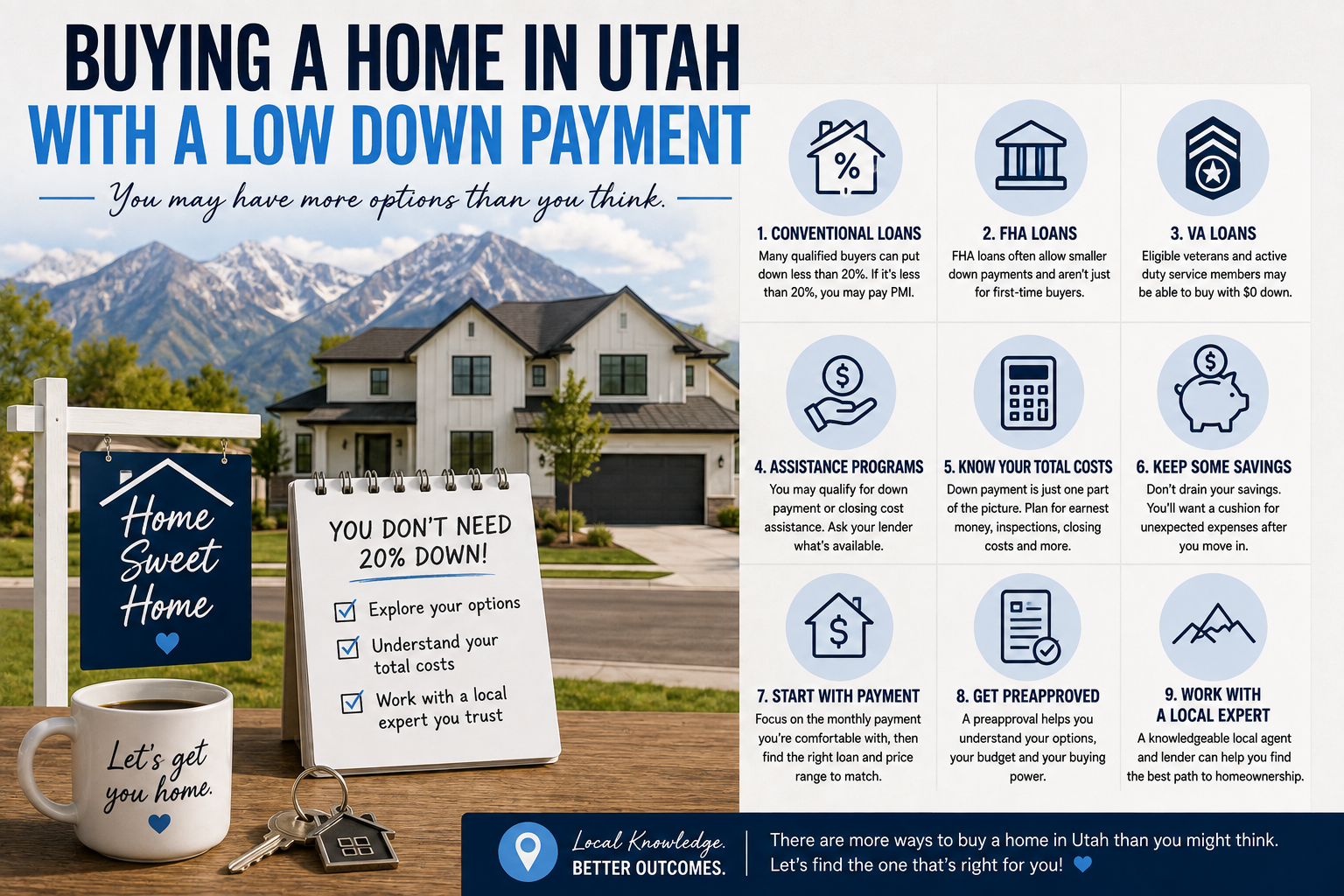
Conventional Loans May Require Less Than You Think
Conventional mortgages are sometimes associated with large down payments, but qualified buyers may have options with much less than 20% down.
The exact requirements depend on factors including the specific loan program, credit profile, income, property and lender guidelines.
If you put less than 20% down on a conventional loan, you may also have private mortgage insurance, commonly called PMI, included in your housing costs.
That additional cost should be considered when comparing your options.
FHA Loans Can Help Buyers With Smaller Down Payments
FHA loans are another popular option, particularly among buyers who don't have a large amount saved for a down payment.
These loans are insured by the Federal Housing Administration and generally have different qualification requirements than conventional financing.
FHA financing isn't only for first time home buyers, either.
Whether it's the best option for you depends on your finances and goals, which is why comparing loan programs with a knowledgeable lender is important.
VA Loans Can Be an Incredible Option for Eligible Buyers
Eligible veterans, active duty service members and certain surviving spouses may qualify for VA financing.
One of the biggest potential benefits of a VA loan is the ability for qualified borrowers to purchase without a down payment.
VA loans also have their own requirements and costs, so eligible buyers should talk with a lender experienced in VA financing to understand exactly how the program works.
Utah Buyers May Have Additional Assistance Options
Depending on your circumstances, you may also qualify for home buyer assistance programs.
These programs can change over time and may include requirements involving income, credit, property type, location or other qualifications.
Rather than assuming you qualify or don't qualify based on something you read online, ask your lender which current programs may be available to you.
Remember That Down Payment Isn't Your Only Expense
If you're saving to buy a home in Utah, don't put every dollar into your down payment without considering the other costs involved.
Buyers may also need money for expenses such as:
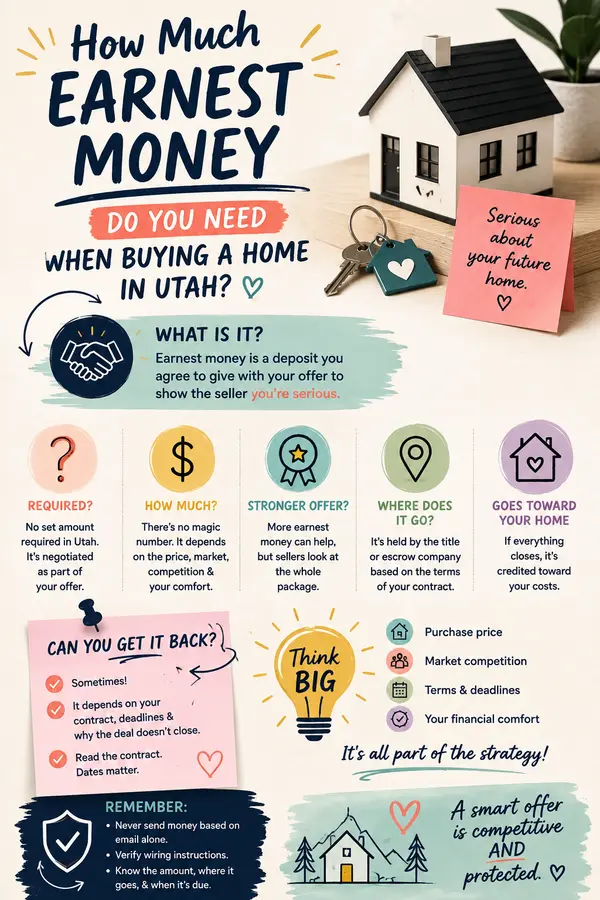
- Earnest money
- Home inspections
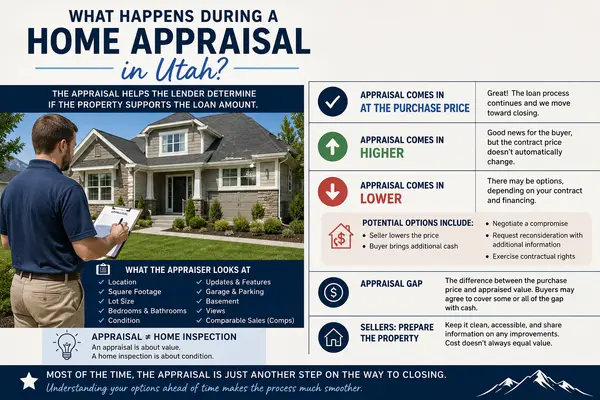
- Appraisal related costs
- Closing costs
- Homeowners insurance
- Moving expenses
- Immediate repairs or purchases after closing
Some of these costs may be handled differently depending on your loan and transaction, but it's important to understand your expected cash needs before making an offer.
What About Closing Costs?
Your down payment and closing costs are two different things.
Closing costs can include lender fees, title related expenses, prepaid taxes and insurance and other costs associated with completing the transaction.
In some transactions, buyers may negotiate for the seller to contribute toward certain allowable closing costs.
Whether that's realistic depends on the property, market conditions, financing and strength of the overall offer.
A Smaller Down Payment Has Tradeoffs
Just because you can purchase a home with a smaller down payment doesn't automatically mean it's the best choice for everyone.
A smaller down payment generally means you're borrowing more money.
Depending on the loan, it may also mean mortgage insurance or other costs.
On the other hand, putting less money down may allow you to keep more cash available for emergencies, moving expenses, repairs and other financial goals.
The important thing is understanding the complete picture rather than assuming the largest possible down payment is always best.
Don't Empty Your Savings Account Just to Buy
Getting the keys to your new home with almost nothing left in savings can create unnecessary stress.
Homes come with unexpected expenses.
An appliance can stop working. A plumbing problem can appear. You may discover you need furniture, tools, window coverings or landscaping equipment almost immediately.
When determining how much to put down, consider what you'll have left after closing too.
Start With the Monthly Payment You Can Comfortably Afford
Instead of beginning with the question, "How much can I qualify for?" start by thinking about the monthly housing payment that fits comfortably into your life.
Your payment may include:
- Principal
- Interest
- Property taxes
- Homeowners insurance
- Mortgage insurance
- HOA fees, when applicable
Your lender can then help you work backward from a comfortable payment and evaluate which price ranges and loan options make sense.
Get Preapproved Before You Assume You Can't Buy
One of the biggest mistakes potential buyers make is waiting years because they assume they don't have enough money saved.
You may discover that you need more time to prepare.
But you may also discover you're much closer to buying a home than you thought.
A mortgage preapproval can give you a clearer understanding of your purchasing power, estimated cash requirements and potential monthly payment.
Buying a Home With Less Than 20% Down Is Possible
You don't need to wait until you've saved 20% of a home's purchase price before talking to a lender or real estate professional.
There are multiple financing options available, and the right strategy depends on your finances, goals and long term plans.
If you're considering buying a home in Northern Utah or anywhere along the Wasatch Front, start by learning what options are actually available to you.
You might find that homeownership is closer than you think.
Recent Posts