
How to Price Your Home to Sell in Utah: Smart Listing Price Strategies That Work
Wondering what price to list your Utah home for? The right listing price can make a significant difference in how quickly your home sells, how many buyers it attracts, and the offers you receive.
Selling your home is one of the biggest financial decisions you'll make, and determining the right asking price is one of the most important steps in the process.
Whether you're selling in Weber County, Davis County, Salt Lake County, Utah County, or elsewhere along the Wasatch Front, pricing your home requires more than looking at what your neighbors sold their properties for.
In today's Utah real estate market, buyers have access to extensive information. They can compare listings, review photos, research neighborhoods, and evaluate prices before ever stepping inside a home.
That means your listing price needs to do more than reflect what you hope your property is worth. It needs to make sense to the buyers who are actively searching.
Graham Allen of the Graham Allen Group explains why strategic pricing matters and how sellers can position their homes for success.
Watch Graham's full video on Utah home pricing strategies here:
Why Your Listing Price Matters in Utah Real Estate
When a home first hits the market, its asking price plays a major role in how buyers respond.
Price your home appropriately, and you may attract serious buyers who recognize its value.
Price it too high, and potential buyers may overlook your listing in favor of comparable properties.
Price it too low without a clear strategy, and you may risk accepting less than the property could otherwise command.
The goal isn't simply to choose the highest possible listing price. It's to identify a price that aligns with the home's features, condition, location, and current market competition.
A thoughtful pricing strategy considers what buyers are willing to pay, not just what a seller hopes to receive.
The Danger of Overpricing Your Utah Home
One of the most common mistakes sellers make is assuming they should list high because they can always lower the price later.
While that approach might seem reasonable, it can create challenges.
When your home first appears on the market, it has an opportunity to capture the attention of buyers who have been actively searching for properties like yours.
If the asking price is significantly higher than comparable homes, those buyers may decide not to schedule a showing.
As the listing spends more time on the market, some buyers may begin questioning why it hasn't sold.
Eventually, a price reduction might become necessary.
But by then, the property may have missed some of its initial momentum.
The takeaway: Starting with a well-researched listing price can be more effective than relying on future price reductions to generate interest.
How Do Real Estate Agents Determine the Right Listing Price?
Professional real estate agents use several factors to develop a pricing recommendation.
1. Recently Sold Comparable Homes
One of the most important tools in real estate pricing is a Comparative Market Analysis, commonly called a CMA.
A CMA evaluates properties that have recently sold and are similar to your home.
Important comparisons include:
-
Location and neighborhood
-
Square footage and lot size
-
Number of bedrooms and bathrooms
-
Age and condition of the property
-
Upgrades and renovations
-
Garage space, basement features, and outdoor amenities
Recent sales help establish what buyers have actually been willing to pay for comparable properties.
However, no two homes are exactly alike. Adjustments may be necessary to account for meaningful differences.
2. Active Listings and Current Competition
Recently sold homes tell us what buyers paid in the past.
Active listings help us understand what buyers can choose from today.
For example, imagine you're listing a four-bedroom home in Layton for $575,000.
If several comparable homes are currently available between $540,000 and $560,000, buyers may question what makes your property worth more.
On the other hand, if your home offers a larger lot, significant upgrades, or desirable features that competing properties lack, a higher price might be justified.
Understanding the competition helps sellers position their homes more effectively.
3. Current Utah Housing Market Conditions
Real estate conditions can vary significantly between communities.
A home in South Weber may face different competition than a property in Ogden, Syracuse, Lehi, or Salt Lake City.
Even neighborhoods within the same city can experience different levels of buyer demand.
Factors such as available inventory, recent sales activity, mortgage rates, and typical days on market can all influence pricing decisions.
That's why local market knowledge matters.
A statewide housing headline doesn't necessarily describe what's happening in your specific neighborhood.
4. Your Home's Condition and Presentation
Buyers consider more than square footage when comparing properties.
They also evaluate how much work a home may need after purchasing it.
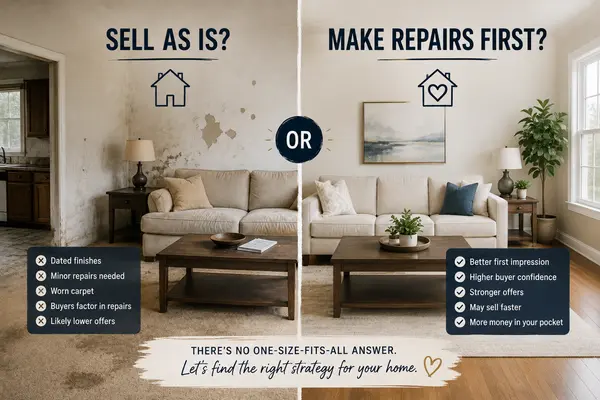
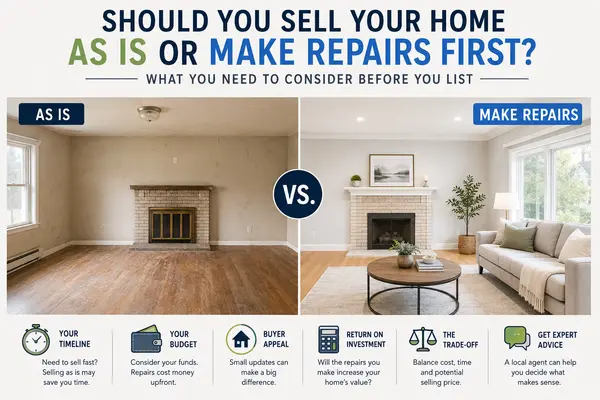
A move-in-ready home with updated systems, fresh paint, and well-maintained landscaping may appeal differently than a similar property requiring significant repairs.
However, not every improvement adds an equal amount of value.
A $30,000 renovation doesn't automatically increase your home's market value by $30,000.
The important question is whether buyers in your market recognize and are willing to pay for those improvements.
Why the First Week on the Market Is So Important
When your home first becomes available, buyers who have been waiting for a suitable property may notice it quickly.
That initial exposure creates an important opportunity.
Ideally, your home should enter the market with:
-
A competitive, research-based listing price
-
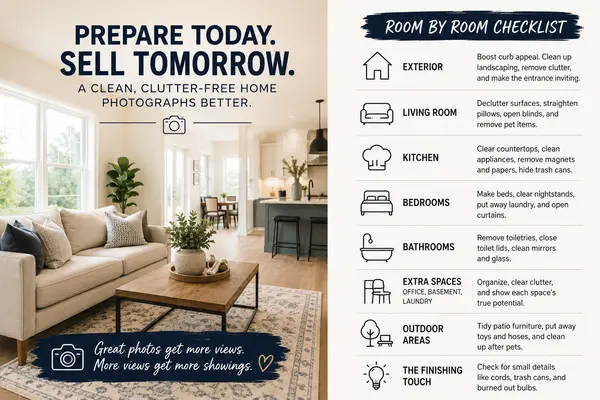
Professional real estate photography
-
A clean, decluttered, and well-presented interior
-
Accurate listing details and compelling property descriptions
-
A marketing strategy designed to reach qualified buyers
Pricing and presentation work together.
A beautifully staged home may struggle if its asking price doesn't align with the market.
Likewise, a competitively priced home may fail to generate its full potential interest if the photographs and presentation don't showcase its best features.
Preparing everything before your listing goes live can help you make the most of that initial attention.
Should You Price Your Home Below Market Value to Attract Multiple Offers?
Some sellers wonder whether listing below market value will automatically create a bidding war.
While an attractive price can generate interest, multiple offers are never guaranteed.
Buyer demand, available inventory, the property's condition, and overall market conditions all influence the outcome.
In some situations, a strategically lower asking price may encourage additional showings and competition.
In others, it may not produce the desired result.
The right approach depends on the specific property and the seller's goals.
The objective should be to maximize your overall outcome, not simply generate the highest number of offers.
What Happens if Your Utah Home Isn't Selling?
If your home has been listed for several weeks without receiving an offer, it may be time to evaluate the strategy.
Start by considering the following questions.
Are buyers viewing the listing online?
Limited visibility could indicate an opportunity to improve marketing, photography, or listing presentation.
Are buyers scheduling showings?
If online interest isn't translating into appointments, the price or presentation may not be compelling enough compared to competing properties.
What are buyers saying after touring the home?
Repeated comments about price, condition, or features can provide useful information.
Have market conditions changed?
New competing listings, recent sales, or shifts in buyer activity may affect your property's position in the market.
Not every home that takes longer to sell is overpriced.
Some properties naturally appeal to smaller groups of buyers.
However, understanding why a listing isn't generating offers allows sellers to make more informed decisions.
Pricing Your Home Is About More Than Selling Quickly
While days on market are important, speed shouldn't be the only measure of success.
A fast sale at an unnecessarily low price may not serve the seller's best interests.
Likewise, holding out for an unrealistic asking price can lead to additional carrying costs, delayed plans, and missed opportunities.
The best strategy considers the seller's overall goals.
Are you relocating for work?
Purchasing another home?
Downsizing?
Selling an investment property?
Your timeline, financial priorities, and flexibility should all be part of the conversation.
A successful sale is one that helps you achieve your goals under the market conditions you're facing.
Frequently Asked Questions About Pricing a Home in Utah
How do I know what my house is worth in Utah?
A local real estate professional can prepare a Comparative Market Analysis using recent sales, active listings, property characteristics, and neighborhood conditions. An appraisal is another form of valuation, although it serves a different purpose.
Should I list my house higher than its market value?
Listing above market value can discourage buyers if competing properties offer better value. Any pricing strategy should be supported by local market data and the home's unique features.
Does Zillow accurately estimate Utah home values?
Online valuation tools can provide a starting point, but they may not fully account for renovations, property condition, unique features, or neighborhood-specific market conditions. A local market analysis can provide additional context.
How long does it take to sell a home in Utah?
Selling times vary by location, price range, property condition, and market conditions. Reviewing recent comparable sales in your specific area is more useful than relying on a single statewide average.
Can I change my listing price after my home goes on the market?
Yes. Sellers can adjust their asking price during the listing period. However, beginning with a carefully researched price may help avoid unnecessary reductions and missed early interest.
Work With the Graham Allen Group to Price Your Utah Home Strategically
Selling a home involves more than putting a sign in the yard and choosing an asking price.
It requires understanding your competition, recognizing what buyers value, preparing your property, and making informed decisions throughout the process.
At the Graham Allen Group, brokered by Real Broker, LLC, we help Utah homeowners evaluate their properties and develop listing strategies based on their goals and local market conditions.
Whether you're preparing to sell in Weber County, Davis County, Salt Lake County, Utah County, Box Elder County, or another Northern Utah community, we're here to help you understand your options.
Thinking about selling your home? Contact Graham Allen and the Graham Allen Group to discuss your property's value and a personalized listing strategy.
And for more insight into how listing prices influence buyer interest and selling outcomes, watch Graham's video:
How to Price Your Home to Sell in Utah | Smart Listing Price Strategies That Work
SEO Meta Title: How to Price Your Home to Sell in Utah | Graham Allen
SEO Meta Description: Learn how to price your Utah home to sell with Graham Allen. Explore listing price strategies, comparable sales, buyer demand, and common seller mistakes.
Suggested URL Slug: how-to-price-your-home-to-sell-in-utah
Suggested Keywords: Utah home pricing strategy, how to price your home in Utah, selling a house in Utah, Utah listing price, Utah real estate agent, Graham Allen Group, comparative market analysis Utah, Weber County home values, Davis County real estate, Salt Lake County home selling tips
Categories
Recent Posts