
What Is a Seller Concession and How Does It Work?

If you're buying or selling a home, you may hear terms like seller concession, seller credit or closing cost assistance during negotiations.
But what do those terms actually mean?
A seller concession can be a useful negotiating tool in a real estate transaction, particularly when a buyer wants to reduce the amount of cash they need at closing.
However, seller concessions aren't simply free money. There are rules, limits and tradeoffs that both buyers and sellers should understand.
Here's how seller concessions work and when they may make sense.
What Is a Seller Concession?
A seller concession is an agreement in which the seller contributes toward certain allowable costs for the buyer as part of the real estate transaction.
Instead of the buyer paying all of those expenses themselves, the seller agrees to cover an agreed amount at closing.
The exact costs a seller concession can cover depend on the buyer's financing and the terms of the transaction.
Your lender and real estate professional can help determine what is permitted in your specific situation.
What Can Seller Concessions Be Used For?
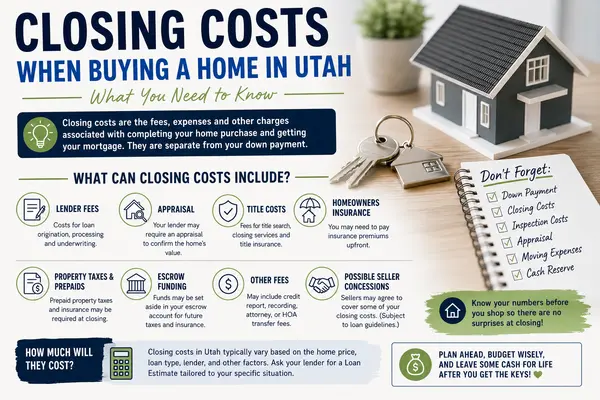
Depending on the buyer's loan and transaction, seller concessions may be used toward certain allowable closing related expenses.
These might include things such as:
- Certain lender fees
- Title related expenses
- Prepaid expenses
- Eligible insurance related costs
- Discount points
- Other allowable closing costs
The buyer's lender ultimately determines which expenses can be covered and what limits apply.
Here's a Simple Example
Let's say a home is being purchased for $500,000.
The buyer expects to have several thousand dollars in allowable closing costs.
As part of the offer, the buyer asks the seller to contribute $7,500 toward those expenses.
If the seller agrees and the buyer's financing allows it, that credit can be applied toward eligible costs at closing.
The buyer still purchases the home according to the agreed purchase price, but the seller's proceeds are reduced by the concession.
Why Would a Buyer Ask for a Seller Concession?
Buying a home requires cash for more than just the down payment.
There may also be closing costs, inspections, moving expenses and other costs involved in becoming a homeowner.
A buyer might have enough income to comfortably afford the monthly mortgage payment but prefer to keep more of their savings available after closing.
A seller concession can potentially reduce some of the buyer's upfront cash requirement.
Why Would a Seller Agree to Pay a Buyer's Closing Costs?
At first, this can sound strange.
Why would a seller voluntarily pay expenses for the person buying their house?
Because real estate negotiations involve more than one number.
A seller may be willing to provide a concession if the rest of the offer makes sense.
For example, a buyer could offer terms that still provide the seller with an acceptable estimated net amount after the concession.
A concession may also help bring a transaction together when the seller is motivated and the buyer needs assistance with allowable closing costs.
Seller Concessions Affect the Seller's Net Proceeds
This is important for sellers.
Don't evaluate an offer based solely on the purchase price.
Imagine receiving these two offers:
Offer A: $500,000 with no seller concession.
Offer B: $505,000 with a $10,000 seller concession.
At first glance, Offer B has the higher purchase price.
But the seller is contributing $10,000 toward the buyer's costs.
That means the higher offer doesn't automatically produce the better financial result.
There are other expenses involved in a sale too, so sellers should review an estimated net rather than comparing only the purchase prices.
Can a Buyer Ask for a Higher Price and a Seller Credit?
Potentially, but this needs to be handled carefully.
A buyer may sometimes negotiate a higher purchase price in exchange for a seller concession.
However, the property still needs to support the agreed price when an appraisal is required.
Simply increasing the purchase price doesn't guarantee that an appraiser will support that value.
The buyer's loan also needs to allow the concession.
This strategy should be discussed with both the lender and real estate professional before being included in an offer.
Are There Limits on Seller Concessions?
Yes.
The amount a seller can contribute may be limited based on factors such as the buyer's loan program, down payment, occupancy and other financing requirements.
Different conventional, FHA, VA and other loan programs can have different guidelines.
Those requirements can also change.
Rather than relying on a generic limit found online, buyers should ask their lender exactly how much seller contribution is permitted for their specific loan.
What Happens if the Buyer Doesn't Use the Entire Credit?
This is another reason buyers need to coordinate closely with their lender.
Seller concessions generally need to be applied toward eligible expenses.
A buyer typically cannot simply receive unused concession money as cash after closing.
If the negotiated credit is larger than the buyer's eligible costs, part of that concession may go unused unless the contract and financing allow another permitted use.
Your lender and real estate professional can help structure the request based on realistic estimated expenses.
Seller Concessions Can Be Used Strategically
A seller concession isn't always about a buyer being unable to afford the home.
Sometimes it's part of a broader financial strategy.
A buyer may prefer to keep additional cash available for:
- Emergency savings
- Moving expenses
- Furniture
- Repairs
- Improvements after closing
In some situations, eligible concessions may also be used toward financing strategies such as discount points or an allowable interest rate buydown.
Your lender can explain whether those options make financial sense for your particular loan.
Should Every Buyer Ask for a Seller Concession?
No.
Market conditions matter.
If a home receives several strong offers, requesting a large seller concession may make your offer less attractive compared with buyers who aren't asking the seller to contribute.
On the other hand, if a home has been sitting on the market or the seller is particularly motivated, there may be more room for negotiation.
This is why offer strategy should be based on the specific property rather than using the exact same approach every time.
Should Sellers Automatically Reject Offers With Concessions?
Not necessarily.
Sellers should look at the complete offer.
Consider:
- Purchase price
- Seller concession
- Financing
- Earnest money
- Due diligence terms
- Appraisal terms
- Closing timeline
- Other contingencies
- Estimated net proceeds
An offer requesting a concession could still be the strongest overall offer.
Seller Concessions Are a Negotiating Tool
At the end of the day, a seller concession is simply another term that can be negotiated in a real estate transaction.
For buyers, it can potentially reduce the amount of cash required for eligible closing expenses.
For sellers, agreeing to a concession may help create a transaction that still meets their financial and timing goals.
The important thing is understanding what the concession actually does to the numbers.
If you're buying or selling a home in Northern Utah or anywhere along the Wasatch Front, don't evaluate an offer based on one number alone.
Purchase price matters.
But sometimes the terms surrounding that price matter just as much.
Categories
Recent Posts