
Should You Accept the Highest Offer on Your Utah Home?

You list your home for sale.
The showings start.
Then the offers come in.
One buyer offers $500,000.
Another offers $510,000.
Easy decision, right?
Take the $510,000.
Not necessarily.
One of the biggest mistakes a seller can make is looking only at the purchase price when comparing offers.
The highest offer can absolutely be the best offer, but price is only one part of a real estate contract.
Financing, contingencies, concessions, appraisal terms, timelines and other conditions can completely change which offer is actually strongest.
Here's what Utah sellers should consider before automatically accepting the highest number.
Start With the Purchase Price
Of course price matters.
If two offers have nearly identical terms and one buyer is offering significantly more money, that's obviously important.
But the purchase price should be the beginning of your comparison, not the end.
You need to understand what each buyer is actually offering and what you're being asked to give in return.
Look at Your Estimated Net Proceeds
Imagine you receive two offers.
Offer A: $500,000 with no seller concession.
Offer B: $510,000 with a $15,000 seller concession.
Offer B has the higher purchase price.
But the buyer is also asking you to contribute $15,000 toward eligible costs.
That changes the financial picture.
There may be other costs and adjustments involved in the transaction too, so your real estate agent can help you compare estimated net proceeds rather than simply looking at the headline price.
The biggest number isn't always the amount that leaves you with the most money.
What Type of Financing Is the Buyer Using?
Look at how the buyer plans to purchase the property.
Are they paying cash?
Using conventional financing?
FHA?
VA?
Another financing program?
The type of financing doesn't automatically make an offer good or bad.
However, different financing arrangements may involve different requirements, timelines and property considerations.
Your agent can help you understand how the financing affects the specific offer you're reviewing.
Has the Buyer Been Preapproved?
If the buyer is financing the purchase, review the available lender information.
A high offer isn't particularly useful if the buyer can't obtain the financing necessary to close.
Depending on the transaction, you may have information regarding the buyer's preapproval or financing status.
The goal isn't simply finding someone willing to write the highest number on a contract.
You want a buyer who has a reasonable path toward actually completing the purchase.
Look at the Earnest Money
Earnest money can provide information about the structure of the buyer's offer and their commitment to the transaction.
But don't evaluate the amount by itself.
You also need to understand the contract terms governing when earnest money may be refundable or nonrefundable.
A large earnest money deposit doesn't necessarily mean the seller automatically receives that money if the transaction doesn't close.
Read the actual terms.
Pay Attention to Due Diligence
The buyer's due diligence terms can be extremely important.
During this period, buyers may investigate the property through inspections and other evaluations according to the contract.
When comparing offers, look at the deadlines and protections the buyer has included.
A buyer offering more money but requesting significantly more time or flexibility may create a different level of uncertainty than another offer.
Again, this doesn't automatically make one offer better.
It simply needs to be considered.
Appraisal Terms Can Change Everything
Imagine you receive an amazing offer that's well above the other offers.
Great.
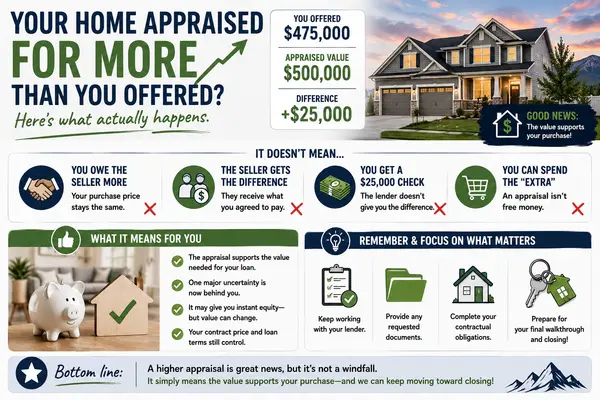
But what happens if the home doesn't appraise for that amount?
If the buyer is financing the purchase, the appraisal terms can become very important.
Does the buyer have protections related to the appraisal?
Have they agreed to cover any appraisal gap?
How much additional cash could they bring if necessary?
A slightly lower offer with stronger appraisal terms could potentially be more attractive than a much higher offer that depends entirely on the property appraising at the offered price.
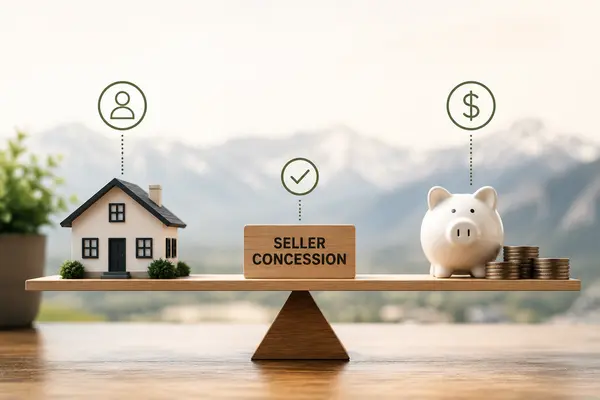
Look at Seller Concessions
We talked about this in another blog, but seller concessions matter when comparing offers.
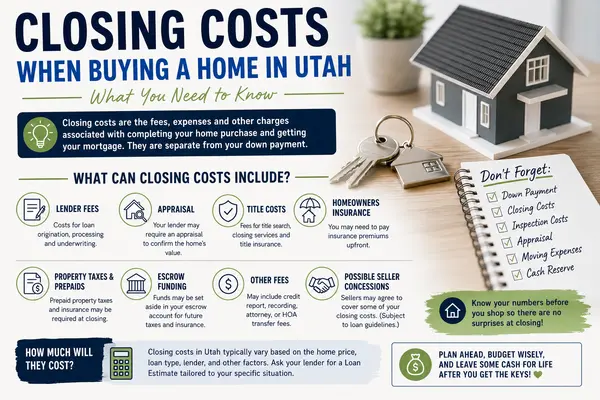
A buyer may ask you to contribute toward allowable closing costs or other eligible expenses.
That's part of the financial offer.
If one buyer offers $5,000 more but asks you for $10,000 more in concessions, the higher purchase price may not actually benefit you.
Always look at the complete financial picture.
Consider the Closing Date
When does the buyer want to close?
Does that timeline work for you?
Maybe you're relocating and need a fast closing.
Maybe your next home won't be ready for another month.
Maybe you need extra time to move.
A buyer willing to accommodate your preferred timeline could provide real value even if their purchase price isn't the absolute highest.
Convenience has value too.
What About Possession?
Closing and possession aren't always the same thing.
When does the buyer expect to receive possession of the property?
Does that give you enough time to move?
Do you need to coordinate your sale with another purchase?
These details can make one offer significantly easier for your situation than another.
Look at the Contingencies
A contingency generally makes some aspect of the transaction dependent on another event or condition.
For example, a buyer may need to sell their existing home.
Depending on the offer, there may also be financing, appraisal, due diligence or other contractual protections.
The fewer contingencies an offer has doesn't automatically mean you should accept it.
But you should understand what needs to happen before each buyer is obligated to complete the purchase.
Does the Buyer Need to Sell Another Home?
A buyer may submit an offer that depends on selling their current property.
That doesn't necessarily make it a bad offer.
Maybe their home is already under contract and close to closing.
Or maybe it hasn't even been listed yet.
Those are very different situations.
If your sale depends on the buyer completing another sale first, understand exactly where that transaction stands.
Think About Certainty, Not Just Price
Let's say one buyer offers $515,000 with several contingencies, a large seller concession and terms that create significant uncertainty.
Another buyer offers $505,000 with strong financing, fewer complications and a timeline that works perfectly for you.
Which one is better?
There isn't enough information to answer that from the purchase prices alone.
The best offer is the one that provides the right combination of price, terms and likelihood of successfully closing based on your goals.
Cash Isn't Automatically King
Sellers often hear that cash offers are always better.
Cash can certainly be attractive.
There may be no financing contingency or lender appraisal requirement depending on the contract terms.
The transaction may also have the potential to close quickly.
But a cash buyer offering significantly less money isn't automatically better than a well qualified financed buyer.
Compare the actual offers.
Don't choose based on a label.
Don't Forget About Your Priorities
Not every seller has the same goal.
Maybe your number one priority is maximizing your proceeds.
Maybe it's closing quickly.
Maybe it's having enough time to move.
Maybe it's reducing the likelihood of the transaction falling apart.
Maybe you're trying to coordinate the sale with the purchase of your next home.
Tell your real estate agent what matters most to you before the offers arrive.
That makes it much easier to evaluate them according to your actual goals.
Can You Counter an Offer?
Depending on the situation, you may decide that you like most of an offer but want to change certain terms.
That's where negotiation can come in.
Maybe the price works but you want a different closing date.
Maybe you want to adjust the requested seller concession.
Maybe there are other terms you'd like changed.
Your real estate agent can help you evaluate whether accepting, rejecting or countering an offer makes sense.
Compare Offers Side by Side
When multiple offers arrive, don't try to remember all the details from reading each contract once.
Compare them side by side.
Look at:
- Purchase price
- Estimated seller proceeds
- Financing
- Seller concessions
- Earnest money
- Due diligence terms
- Appraisal terms
- Contingencies
- Closing date
- Possession
- Other important conditions
Seeing the offers this way makes it much easier to understand the tradeoffs.
The Best Offer Isn't Always the Highest Offer
Selling your home isn't an auction where the biggest number automatically wins.
You're choosing a contract and a path toward closing.
A strong offer needs to make sense financially, but it also needs to have terms that work for your situation.
Sometimes the highest offer will absolutely be the best one.
Sometimes it won't.
If you're selling a home in Northern Utah or anywhere along the Wasatch Front, make sure you're comparing the complete offers rather than focusing on one number.
Because the goal isn't simply to accept the highest offer.
It's to accept the offer most likely to get you the outcome you actually want.
Categories
Recent Posts