Should You Sell Your Home As Is or Make Repairs First?

You're getting ready to sell your home.
Then you start looking around.
There's chipped paint in the hallway.
That bathroom could definitely use an update.
The carpet has seen better days.
There's a faucet you've been meaning to fix for two years.
And suddenly you're wondering whether you need to renovate the entire house before putting it on the market.
Usually, you don't.
But that doesn't mean you should ignore everything either.
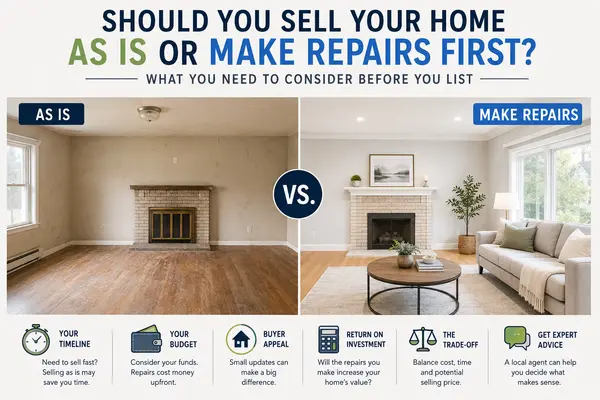
Deciding whether to sell your Utah home as is or make repairs first comes down to the condition of the property, the likely cost of the work, your timeline and what buyers in your market are willing to pay.
Here's how to decide where your money and effort may actually make a difference.
What Does Selling As Is Mean?
When sellers hear "as is," they sometimes assume it means they can put the house on the market, disclose nothing and refuse to answer questions.
That's not what it means.
Selling a home as is generally means the seller is communicating that they don't intend to make certain repairs or improvements as part of the sale.
Your contractual obligations and applicable disclosure requirements still matter.
"As is" doesn't make known property issues disappear.
It simply affects how you're approaching the condition of the home and negotiations.
You Probably Don't Need a Full Renovation
One of the biggest mistakes sellers can make is assuming they need to completely remodel before listing.
New kitchen.
New bathrooms.
New flooring.
New everything.
That can get expensive very quickly.
And the money you spend doesn't automatically come back dollar for dollar in the sale price.
Before committing $40,000 to a renovation, ask whether buyers in your particular market are actually likely to pay enough more for the finished home to justify the cost.
Sometimes they will.
Sometimes they won't.
Start With the Small Things
Before we talk about major renovations, look at the simple repairs you've been ignoring.
Fix the loose door handle.
Replace burned out bulbs.
Repair the dripping faucet.
Touch up obvious wall damage.
Secure the loose railing.
Replace a broken switch plate.
These aren't glamorous improvements, but they can change how buyers perceive the overall condition of the property.
When buyers see several small neglected items, they may start wondering what larger maintenance issues have also been ignored.
First Impressions Matter
Imagine walking into a house and immediately seeing a broken cabinet handle, a leaking faucet and several burned out lights.
None of those things individually are necessarily major problems.
But together they create a feeling.
The buyer starts thinking:
"What else hasn't been maintained?"
That's why small repairs can sometimes be more valuable than flashy upgrades.
You're not necessarily trying to make the home brand new.
You're trying to make it feel cared for.
Clean Before You Renovate
Before spending thousands of dollars changing your house, clean it.
Seriously.
A deep cleaning can make a surprising difference.
Clean the floors.
Wash the windows.
Scrub the bathrooms.
Clean appliances.
Remove grime from baseboards.
Clean the walls where appropriate.
Deal with odors.
A clean older home can often show better than an updated home that feels dirty or neglected.
Decluttering Is Basically Free
You may not need to change the house.
You may need to remove half the stuff inside it.
Crowded rooms feel smaller.
Packed closets look like they don't have enough storage.
Countertops covered with appliances make kitchens feel cramped.
Start packing early.
You're going to move those things eventually anyway.
Removing clutter can make your home look larger without changing a single square foot.
Paint Can Make a Big Difference
If your walls are heavily marked, damaged or painted in colors that overwhelm the space, fresh paint may be worth considering.
You don't necessarily need to repaint every room.
Focus on areas where paint would noticeably improve presentation.
The goal isn't to erase every bit of personality from the home.
It's to reduce distractions and help buyers focus on the property itself.
What About Flooring?
Flooring is one of those decisions that depends heavily on condition.
If the carpet is simply older but clean and functional, replacing it may not be necessary.
If it's badly stained, damaged or creating an odor problem, that's different.
Before replacing flooring throughout the house, talk with your real estate agent about how buyers in your market are likely to respond.
Sometimes new flooring can improve presentation significantly.
Other times the buyer would rather choose their own after closing.
Should You Remodel the Kitchen?
Usually, I wouldn't recommend completely remodeling a functional kitchen solely because you're planning to sell without first looking closely at the numbers.
Kitchen renovations can be expensive.
If the kitchen is dated but clean and functional, buyers may still be perfectly willing to purchase the home.
You may get more value from smaller improvements such as cleaning, repairing damaged items, updating a light fixture or making other targeted changes.
A major renovation should have a clear strategy behind it.
What About Bathrooms?
The same idea applies.
A dated bathroom isn't automatically a problem.
A bathroom with active leaks, damaged fixtures or obvious maintenance issues may deserve attention.
There's a difference between "not my style" and "not functioning properly."
Sellers sometimes spend a lot of money trying to solve style problems when buyers may have preferred to choose their own finishes anyway.
Repairs Can Affect Financing
Property condition can become more important depending on the buyer's financing.
Certain loan programs may have property requirements that affect whether financing can proceed.
That doesn't mean every older or imperfect home needs to be renovated.
It means significant safety, structural or condition issues can sometimes create additional complications.
If you know your home has major concerns, discuss them with your real estate professional before listing so you understand how they could affect potential buyers.
What About the Roof, HVAC and Other Big Systems?
This is where the decision becomes more property specific.
An older roof isn't automatically a failed roof.
An older furnace isn't automatically broken.
But if a major system has a known problem, buyers are likely to care.
Before replacing an expensive system simply because of its age, understand its actual condition and how it may affect the sale.
There may be situations where repairing or replacing something before listing makes sense.
There may be others where pricing the home appropriately and allowing the buyer to address it later is the better strategy.
Selling As Is Can Make Sense
There are plenty of situations where selling without completing major repairs may be the right choice.
Maybe you need to move quickly.
Maybe the property is inherited.
Maybe you don't have the cash available for renovations.
Maybe you're selling an investment property.
Maybe the home needs enough work that trying to fix everything would turn into a major project.
There is a buyer for almost every type of property.
The question becomes what price and terms make sense for the condition.
But As Is Doesn't Mean Buyers Won't Care
You can tell buyers you're selling as is.
That doesn't mean they'll ignore the condition.
Buyers will still evaluate what they're purchasing.
They may factor anticipated repairs into the price they're willing to offer.
Some buyers may decide the work is more than they want to take on.
Others may see opportunity.
Selling as is can save you time and money upfront, but it may affect your buyer pool and the offers you receive.
Don't Over Improve for the Neighborhood
Another mistake sellers can make is improving the home far beyond what the surrounding market supports.
If comparable homes in your neighborhood aren't selling at prices that justify your renovation budget, spending more money doesn't necessarily create more value.
Your home still exists within its market.
Before renovating, look at what similar updated and non updated homes are actually selling for.
That's much more useful than guessing what an improvement might add.
Calculate the Potential Return
Let's say you're considering spending $15,000 before listing.
The question isn't simply:
"Will this make the house nicer?"
It probably will.
The better question is:
"Is this likely to improve my selling outcome enough to justify the $15,000, time and effort?"
Maybe the work could help the home sell faster.
Maybe it could attract more buyers.
Maybe it could support a higher price.
Or maybe you'd spend $15,000 to gain very little.
That's the analysis we want to do before starting the project.
Your Timeline Matters
Repairs take time.
Renovations take even more time.
If getting the home market ready delays your sale by two months, that matters.
Consider your mortgage payments, utilities, insurance and other carrying costs during that period.
A renovation doesn't happen in a financial vacuum.
Sometimes selling sooner at a slightly lower price produces a better overall outcome than spending months trying to make the property perfect.
Fix Problems That Distract From the Whole House
One useful way to prioritize repairs is to ask whether a problem is likely to dominate the buyer's impression.
A badly damaged front door?
Buyers see it before they even enter.
A strong pet odor?
They're going to notice immediately.
A visibly leaking sink?
That can raise questions.
A tiny scratch inside a closet?
Probably not the thing that determines whether somebody buys the house.
Focus first on the issues that could make buyers stop paying attention to everything else your home has to offer.
Price and Condition Work Together
If you choose not to make certain repairs, your pricing strategy becomes even more important.
Buyers compare your home with the alternatives available to them.
If another house is updated and move in ready while yours needs significant work, the price may need to reflect that difference.
There's nothing wrong with selling a fixer upper.
There's nothing wrong with selling a beautifully updated home.
The problem happens when a fixer upper is priced as though it's beautifully updated.
Get Advice Before You Start Spending
If you're thinking about selling, talk with your real estate agent before beginning major projects.
We can look at comparable sales.
We can see what competing homes look like.
We can identify which issues are most likely to matter to buyers.
Then you can decide where your money is actually worth spending.
You may discover you need fewer repairs than you thought.
Or we may identify a few strategic improvements that could make a meaningful difference.
The Goal Isn't Perfection
Your home doesn't need to look brand new.
It needs to be presented and priced appropriately for its condition.
Sometimes that means making repairs.
Sometimes that means cleaning, decluttering and doing a handful of inexpensive improvements.
And sometimes the best decision really is to sell the property as is.
If you're preparing to sell a home in Northern Utah or anywhere along the Wasatch Front, don't start renovating just because you assume buyers expect perfection.
Look at the market first.
Then spend your time and money where it actually matters.
Categories
Recent Posts