How Much Down Payment Do You Really Need to Buy a Home?
by Graham Allen
One of the biggest myths about buying a home is that you need a 20 percent down payment. While putting 20 percent down can have benefits, it is far from the only option. In fact, many buyers purchase homes with much less.
If you've been waiting to save a huge down payment before starting your home search, you may be closer than you think.
Do You Really Need 20 Percent Down?
The short answer is no.
The 20 percent rule has been around for years because putting down at least 20 percent on a conventional loan often allows buyers to avoid private mortgage insurance, also known as PMI. However, many buyers successfully purchase homes with much smaller down payments.
The best loan for you depends on your financial situation, credit score, military eligibility, income, and long term goals.
Conventional Loans
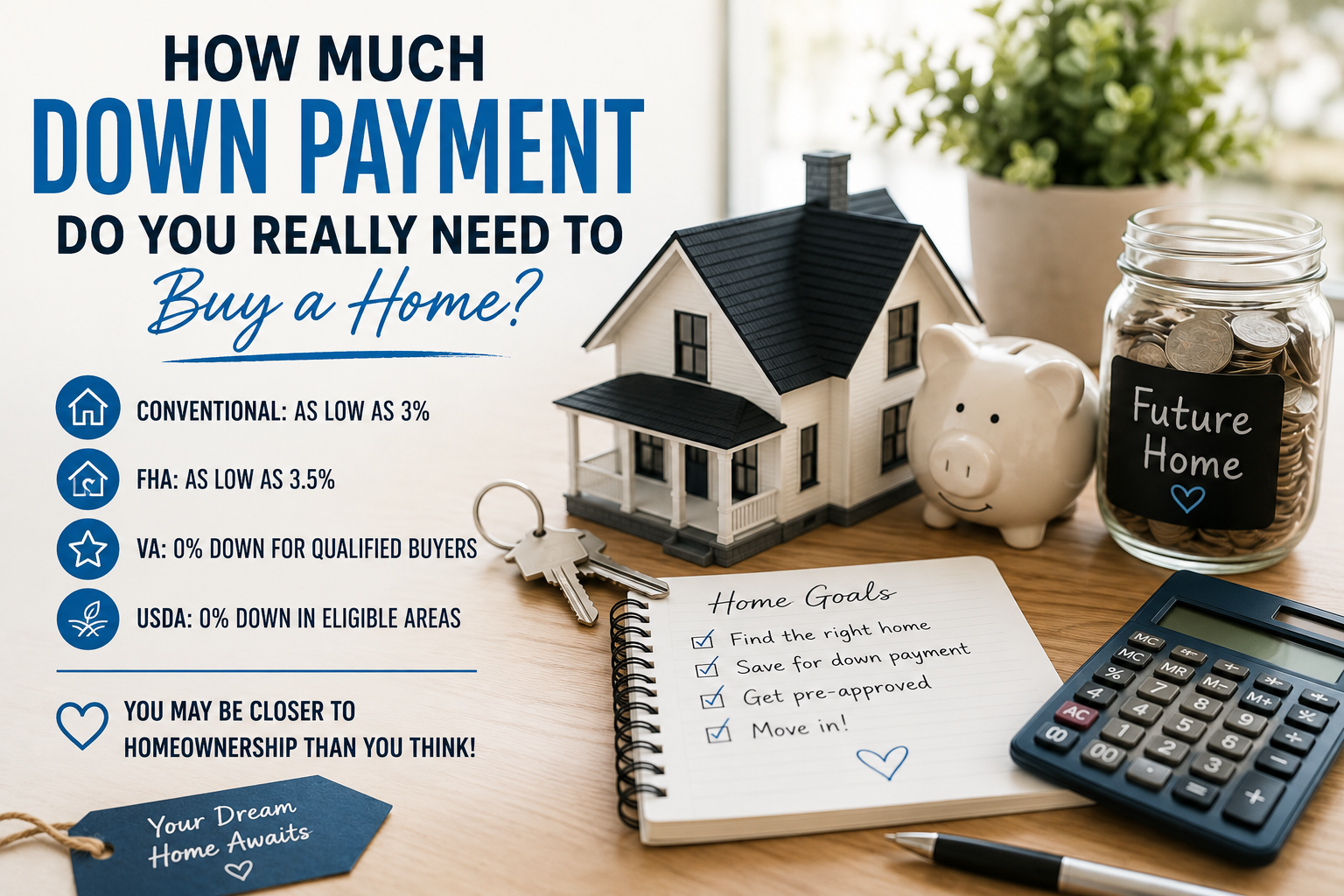
Many conventional loan programs allow qualified buyers to purchase a home with as little as 3 percent down.
While a smaller down payment may require PMI, it allows many buyers to become homeowners sooner instead of waiting years to save a larger amount.
FHA Loans
FHA loans are popular with first time home buyers because they offer flexible qualification requirements.
Qualified buyers may be able to purchase a home with as little as 3.5 percent down, making homeownership more accessible for many families.
VA Loans
If you're an eligible veteran, active duty service member, or qualifying military borrower, a VA loan may allow you to purchase a home with no down payment at all.
VA loans are one of the most valuable mortgage benefits available and often include competitive interest rates and flexible guidelines.
USDA Loans
Some buyers purchasing homes in eligible rural areas may qualify for a USDA loan.
These loans can also offer 100 percent financing, meaning qualified buyers may not need a down payment.
Should You Put More Money Down?
Just because you can buy with a smaller down payment doesn't always mean you should.
A larger down payment may:
- Lower your monthly mortgage payment
- Reduce the amount of interest paid over time
- Help you avoid PMI on some conventional loans
- Increase your home equity from day one
- Make your offer more attractive in competitive markets
However, using every dollar you have for your down payment may leave you without enough savings for moving expenses, furniture, maintenance, or unexpected repairs.
Finding the right balance is often more important than making the largest down payment possible.
Don't Forget About Closing Costs
Many first time buyers focus entirely on saving for their down payment and forget about closing costs.
Closing costs typically include lender fees, title services, escrow fees, homeowners insurance, prepaid taxes, and other expenses required to finalize your purchase.
Your lender will provide an estimate early in the process so you'll know approximately how much cash you'll need at closing.
Assistance Programs May Be Available
Many buyers are surprised to learn there are down payment assistance programs that may help qualified borrowers purchase a home sooner.
These programs vary based on income, location, loan type, and other qualifications. A knowledgeable lender can help determine whether you qualify.
The Best First Step
Instead of guessing how much money you need, talk with a trusted lender before you begin house hunting.
Getting pre-approved gives you a clear understanding of your budget, estimated monthly payment, loan options, and how much you'll need for your down payment and closing costs.
You may discover you're ready to buy much sooner than you expected.
If you're thinking about buying a home in Northern Utah or anywhere along the Wasatch Front, we'd love to help you understand your options and guide you through every step of the home buying process.
Recent Posts