
Market Value vs. Appraised Value: What's the Difference?
If you're buying or selling a home, you've probably heard the terms market value and appraised value used in conversation.
Many people assume they mean the same thing.
They don't.
While they're closely related, they serve two very different purposes during a real estate transaction. Understanding the difference can help buyers and sellers make informed decisions and avoid unnecessary stress throughout the process.
What Is Market Value?
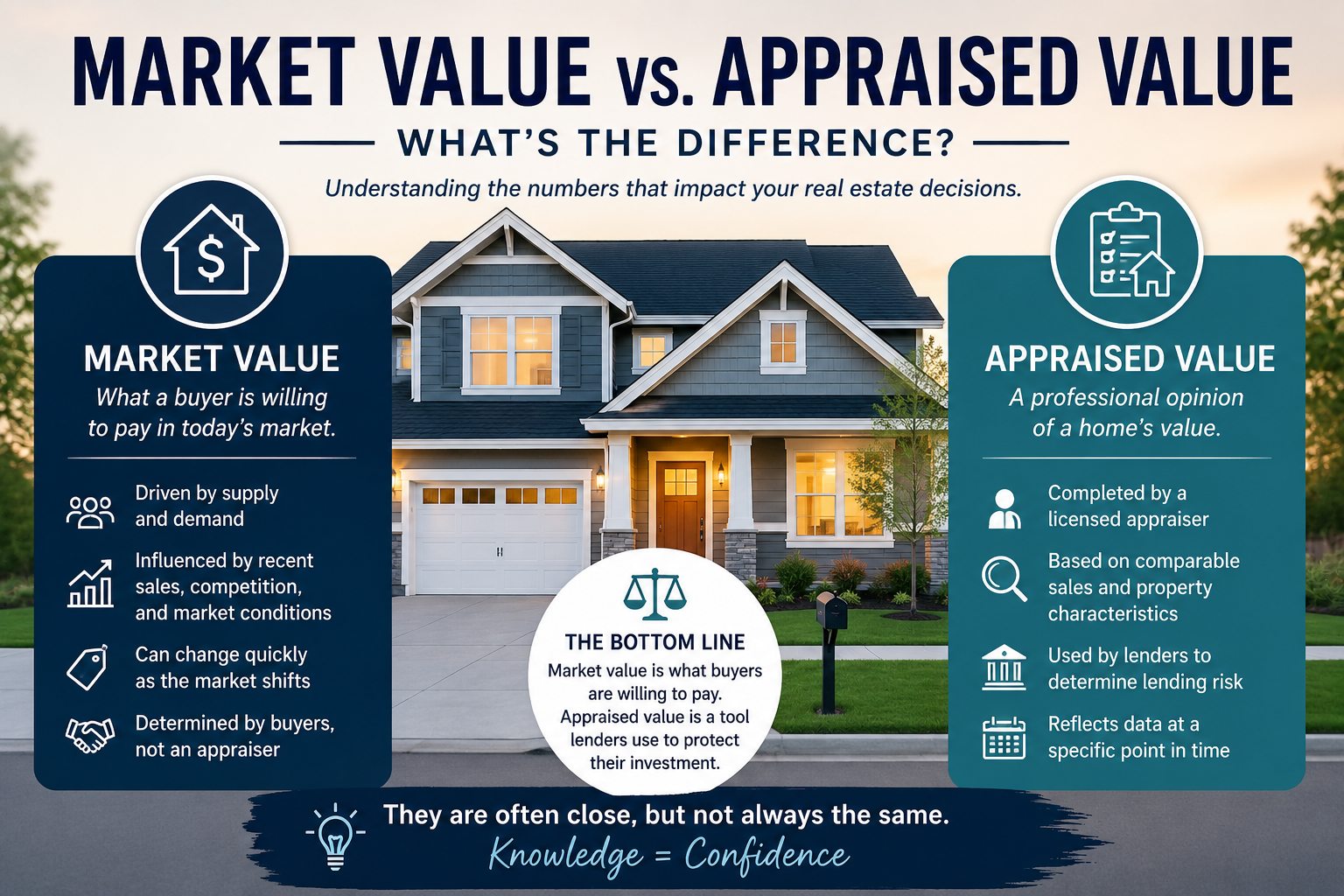
Market value is what a buyer is willing to pay for a home in today's market.
Unlike an appraisal, market value isn't determined by one individual. It's influenced by many factors, including:
-
Supply and demand
-
Recent comparable home sales
-
Interest rates
-
Neighborhood desirability
-
Home condition
-
Upgrades and features
-
Current buyer competition
If several buyers are interested in the same property, the market value may increase because demand is driving the price higher.
Simply put, the market determines market value.
What Is an Appraised Value?
An appraised value is a professional opinion of a home's value completed by a licensed appraiser.
Most mortgage lenders require an appraisal before approving a loan. The purpose is to help confirm that the home supports the amount being financed.
During an appraisal, the appraiser evaluates factors such as:
-
Comparable recent sales
-
Square footage
-
Lot size
-
Overall condition
-
Home features and upgrades
-
Current market conditions
The appraiser then provides an estimated value based on that research.
Why Can Market Value and Appraised Value Be Different?
One of the biggest surprises for buyers and sellers is learning that these two numbers don't always match.
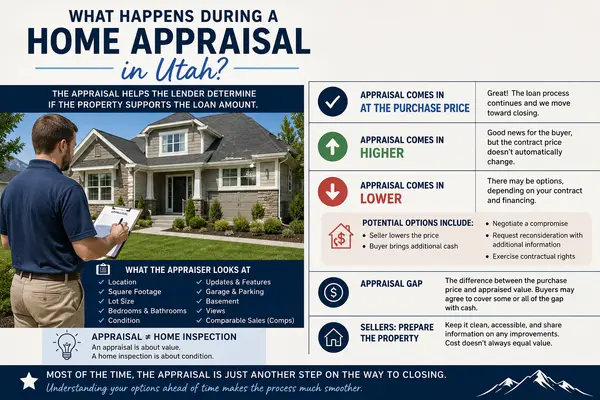
Sometimes the appraised value comes in exactly at the purchase price.
Sometimes it's higher.
Sometimes it's lower.
That doesn't necessarily mean someone made a mistake.
Market value reflects what buyers are willing to pay at that moment, while an appraisal is based on available sales data and professional analysis.
Because those two perspectives are different, the values don't always align perfectly.
What Happens If an Appraisal Comes in Low?
A low appraisal doesn't automatically mean the transaction is over.
Depending on the contract and the situation, buyers and sellers often have several options.
They may choose to:
-
Renegotiate the purchase price
-
Split the difference
-
Have the buyer bring additional cash to closing
-
Request another review if appropriate
-
End the transaction if an agreement can't be reached
Every situation is unique, which is why it's important to work with experienced professionals who can help guide the negotiation.
What Should Sellers Know?
Many homeowners naturally believe their home is worth a certain amount based on upgrades, memories, or what they've invested over the years.
While those things certainly matter, buyers ultimately determine market value.
At the same time, one appraisal doesn't permanently define your home's value.
Real estate markets change.
Buyer demand changes.
Interest rates change.
Home values change over time.
That's why pricing your home based on current market conditions is one of the most important decisions you'll make when selling.
Market Value vs. Appraised Value at a Glance
Market Value
-
Determined by buyers and the current market
-
Influenced by supply and demand
-
Can change quickly as market conditions change
-
Helps determine an appropriate listing price
Appraised Value
-
Determined by a licensed appraiser
-
Required by most mortgage lenders
-
Based on comparable sales and property characteristics
-
Helps lenders evaluate lending risk
Understanding the difference between these two values can make the buying and selling process much easier to navigate.
Frequently Asked Questions
Is market value the same as appraised value?
No. Market value reflects what buyers are willing to pay, while appraised value is a professional opinion prepared by a licensed appraiser for lending purposes.
Can a home sell for more than its appraised value?
Yes. Buyers may choose to pay more than the appraised value, although financing may require additional negotiations or cash depending on the loan.
Does a low appraisal mean my home isn't worth the asking price?
Not necessarily. It simply means the appraiser's opinion of value differs from the agreed-upon purchase price. Buyers and sellers often work together to find a solution.
Who determines market value?
The market does. Buyer demand, comparable sales, inventory levels, interest rates, and overall market conditions all influence what buyers are willing to pay for a home.
Buying or Selling a Home in Utah?
Whether you're buying or selling in Salt Lake County, Davis County, Weber County, Utah County, or anywhere along the Wasatch Front, understanding how home values work can help you make confident decisions.
At Graham Allen Group, we help our clients understand today's market, develop smart pricing strategies, and navigate every step of the transaction with confidence.
If you're thinking about buying or selling a home and have questions about pricing, appraisals, or the current market, we'd love to help.
Recent Posts