
Should You Accept the Highest Offer on Your Home?

Getting multiple offers on your home is exciting.
When you see several numbers sitting in front of you, your first instinct may be simple: pick the highest one.
But the highest offer isn't always the best offer.
The price matters, of course, but there are several other terms that can determine how much money you actually walk away with and whether the transaction successfully makes it to closing.
If you're selling a home in Utah, here's what you should consider before automatically accepting the biggest number.
1. Look at the Buyer's Financing
One of the first things to evaluate is how the buyer plans to purchase your home.
Are they paying cash? Using conventional financing? FHA? VA?
The type of financing doesn't necessarily make one offer better than another, but sellers should understand the terms attached to each offer.
You'll also want to know whether the buyer has been preapproved and how strong their financing appears to be.
An impressive offer price doesn't mean much if the buyer can't ultimately obtain the loan.
2. Compare the Down Payments
A larger down payment may indicate that a buyer has more financial flexibility.
That can become especially important if something unexpected happens during the transaction.
However, the buyer with the largest down payment isn't automatically the strongest buyer.
It's simply one factor to consider alongside the rest of the offer.
3. Pay Attention to Contingencies
Contingencies give buyers certain protections during the transaction.
Common contingencies may involve:
- Financing
- Appraisal
- Due diligence
- The sale of another property
Two buyers could offer exactly the same price while presenting very different levels of risk to the seller.
Understanding the contingencies and deadlines in each offer is an important part of comparing them.
4. Consider the Due Diligence Terms
In Utah real estate transactions, the due diligence period gives buyers an opportunity to investigate the property and decide whether they want to continue with the purchase.
This may include inspections, reviewing documents and evaluating the overall condition of the home.
When comparing offers, sellers should pay attention to the buyer's proposed due diligence deadline and other related terms.
A shorter timeline may provide the seller with greater certainty sooner in the transaction.
5. Look at the Appraisal Risk
Imagine receiving an offer that's significantly higher than every other offer.
Sounds great, right?
Maybe.
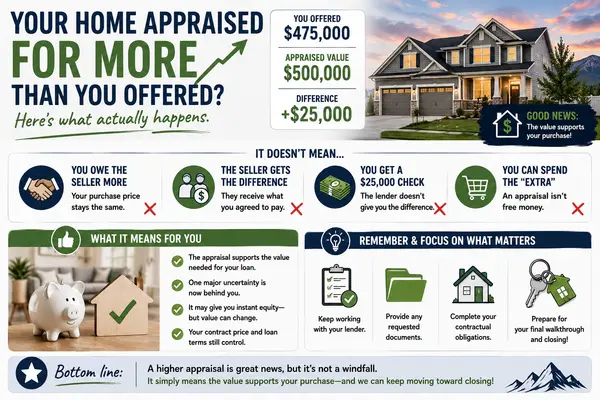
If the buyer is financing the purchase, the home may need to appraise sufficiently for the lender.
If the appraisal comes in below the purchase price, the transaction may require additional negotiation depending on the terms of the contract.
A slightly lower offer with stronger appraisal terms could potentially be more attractive than a much higher offer with greater uncertainty.
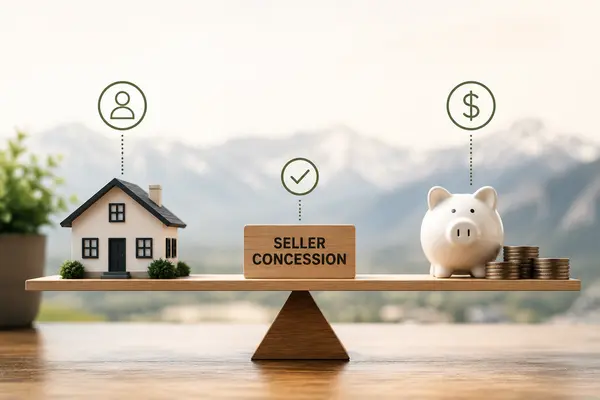
6. Review Seller Concessions
Don't compare offers using purchase price alone.
One buyer might offer $500,000 while requesting thousands of dollars toward closing costs.
Another buyer might offer slightly less without requesting those concessions.
Depending on the numbers, the lower offer could actually provide the seller with better estimated proceeds.
Your agent can help you compare the financial impact of each offer rather than simply looking at the price at the top of the contract.
7. Consider the Closing Date
Sometimes timing is incredibly valuable.
Maybe you've already purchased another home.
Maybe you need additional time before moving.
Maybe you need to close quickly.
An offer that works perfectly with your timeline may be more valuable to you than one offering slightly more money but creating logistical problems.
8. Does the Buyer Need to Sell Another Home?
Some buyers need to sell their current property before they can complete the purchase of yours.
That doesn't automatically make their offer bad.
However, it introduces another transaction into the equation.
If their home doesn't sell or their transaction encounters problems, it could potentially affect your sale.
Understanding exactly where that buyer stands in their selling process can help you evaluate the risk.
9. Look at Earnest Money
Earnest money is the buyer's good faith deposit after an offer is accepted.
When comparing offers, sellers may consider both the amount of earnest money offered and the contract terms governing it.
A strong earnest money deposit may demonstrate a buyer's commitment, but it should still be considered alongside the rest of the contract.
10. Consider the Entire Offer
This is ultimately what matters most.
Imagine receiving these two offers:
Offer A: $510,000 with several contingencies, requested seller concessions and a timeline that doesn't work well for you.
Offer B: $505,000 with stronger terms, fewer complications and your preferred closing date.
Which one is better?
There isn't enough information to decide based solely on price.
That's exactly the point.
The Best Offer Is the One That Best Meets Your Goals
Selling a home isn't simply about finding the buyer willing to write the biggest number on a contract.
It's about balancing price, terms, timing and the likelihood of successfully reaching closing.
Sometimes the highest offer really is the best offer.
Sometimes it isn't.
Compare Offers Strategically
When multiple offers arrive, your real estate agent should help you compare them side by side and understand the advantages and potential risks of each one.
The goal is to make an informed decision based on your priorities rather than automatically chasing the highest purchase price.
If you're selling a home in Northern Utah or anywhere along the Wasatch Front, having an experienced real estate professional help you evaluate and negotiate offers can make a significant difference.
Because when it comes to selling your home, the number that matters most isn't necessarily the highest offer.
It's the offer that gives you the best overall outcome.
Categories
Recent Posts