
What Credit Score Do You Need to Buy a House?
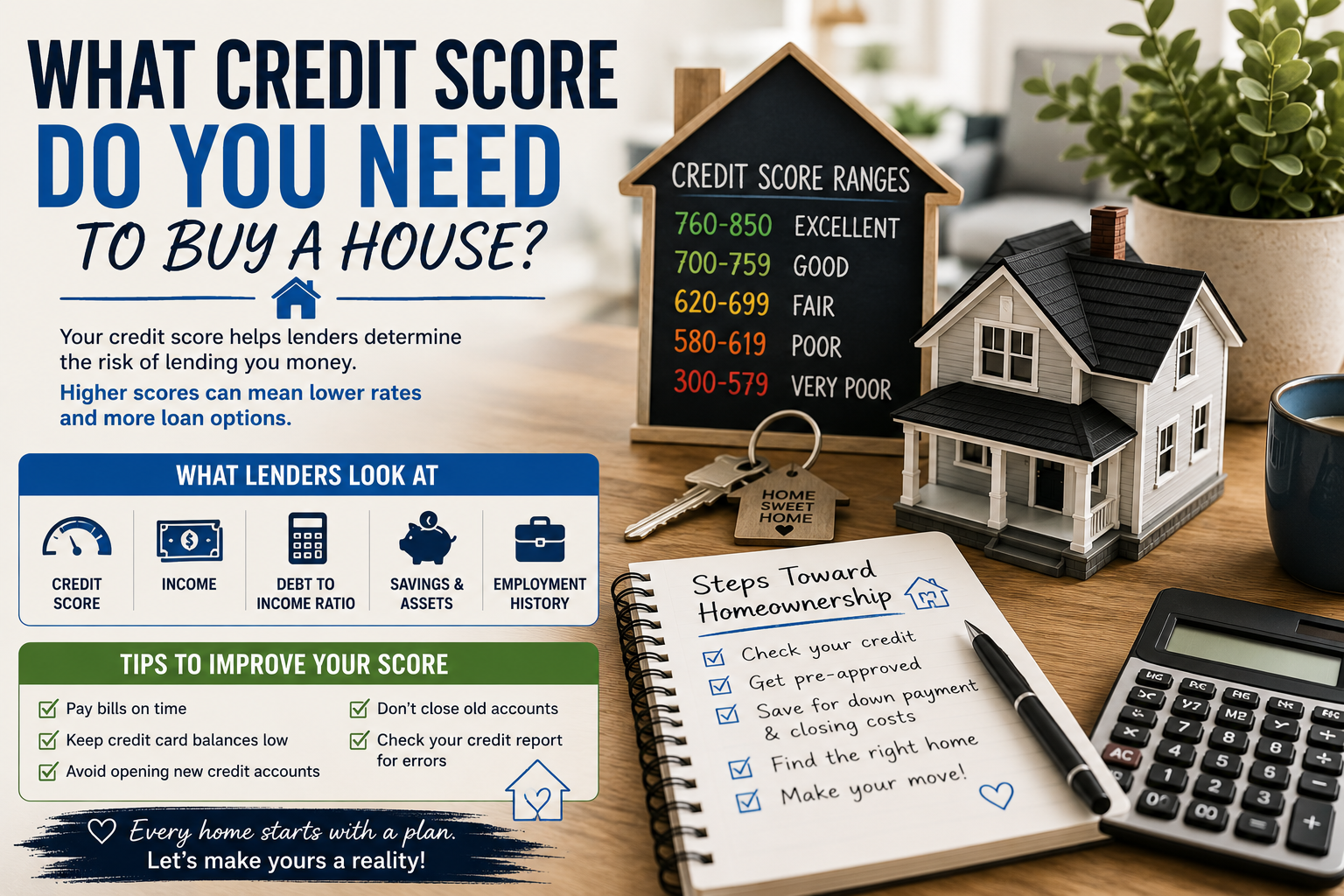
If you're thinking about buying a home, you've probably wondered whether your credit score is high enough to qualify for a mortgage. The good news is that there isn't one magic number that determines whether you can buy a home.
While your credit score plays an important role in the mortgage process, lenders look at your overall financial picture, not just a single number.
Here's what you should know before you start your home buying journey.
Why Your Credit Score Matters
Your credit score helps lenders evaluate how you've managed debt in the past.
A higher credit score may help you qualify for:
-
Better interest rates
-
Lower monthly mortgage payments
-
More loan options
-
Lower overall borrowing costs
However, having a lower credit score doesn't automatically mean you can't buy a home.
Different Loan Programs Have Different Requirements
Every mortgage program has its own qualification guidelines.
For example:
-
Conventional loans often require higher credit scores than government backed loans.
-
FHA loans are designed to help more buyers qualify and may offer more flexibility.
-
VA loans are available to eligible veterans and military members and often have flexible credit requirements.
-
USDA loans also have their own qualification standards for eligible buyers and properties.
Because every lender has slightly different guidelines, it's worth speaking with a mortgage professional even if you think your credit score isn't high enough.
Your Credit Score Is Only One Piece of the Puzzle
Lenders also consider several other factors when reviewing your mortgage application.
These may include:
-
Your income
-
Employment history
-
Debt to income ratio
-
Savings and assets
-
Down payment amount
-
Payment history
Someone with a lower credit score but stable income and low debt may still qualify for a mortgage.
How to Improve Your Credit Score Before Buying
If you're planning to buy a home in the future, there are several steps you can take to strengthen your credit.
Pay Bills on Time
Your payment history is one of the biggest factors affecting your credit score. Consistently making payments on time can have a significant positive impact over time.
Keep Credit Card Balances Low
Try to avoid carrying high balances on your credit cards.
Using only a small portion of your available credit can improve your credit utilization ratio, which is another important factor in your credit score.
Avoid Opening New Credit Accounts
If you're planning to purchase a home soon, avoid opening unnecessary credit cards or financing large purchases.
New credit accounts and hard inquiries can temporarily impact your score.
Don't Close Old Credit Cards
Older accounts contribute to your credit history.
Unless there's a specific reason, keeping older accounts open may help maintain a longer average credit history.
Check Your Credit Report
Review your credit report for errors before applying for a mortgage.
Incorrect information can sometimes lower your score, and correcting mistakes may improve your borrowing opportunities.
Should You Wait Until Your Credit Is Perfect?
Not necessarily.
Many buyers spend years waiting for the "perfect" credit score when they may already qualify for a mortgage today.
The best way to know where you stand is by speaking with a trusted lender. They can review your financial situation, explain your options, and even help you create a plan if your credit needs improvement before buying.
The First Step Toward Homeownership
Your credit score is important, but it shouldn't stop you from exploring your options.
Whether you're ready to buy today or planning for the future, understanding your financial picture is the first step toward homeownership.
If you're thinking about buying a home in Northern Utah or anywhere along the Wasatch Front, we'd be happy to connect you with trusted local lenders and help you navigate the home buying process with confidence.
Recent Posts