
How to Buy a Home Before Selling Your Current Home
You want to move.
You've found homes you love, you're ready for something different and you're excited to start looking.
There's just one problem.
You already own a house.
For many Utah homeowners, buying and selling at the same time creates one big question:
How do I buy my next home before my current home sells?
The good news is that there are several ways to structure a move like this. The right strategy depends on your finances, available equity, current mortgage, local market and how much risk you're comfortable taking on.
Here's what you should know before trying to buy a home while you still own your current one.
Start With Your Lender
Before you start touring homes, talk with your lender.
This is especially important when you already have a mortgage.
Your lender can help determine whether you could potentially qualify for your next home while still carrying the payment on your current property.
If you can qualify for both homes at the same time, you may have significantly more flexibility.
If you can't, that's okay too.
We simply need to build your buying and selling strategy around that reality.
Find Out How Much Equity You Have
Your home equity can play an important role in determining your options.
Equity is essentially the difference between your home's value and what you still owe against it, although your actual proceeds from a sale will also be affected by transaction expenses and other obligations.
Before making plans based on the money you expect from your sale, get a realistic estimate of:
- Your home's potential market value
- Your current mortgage payoff
- Estimated selling expenses
- Your estimated proceeds
The number that matters isn't simply what your house might sell for.
It's approximately how much money you may actually have available after the sale.
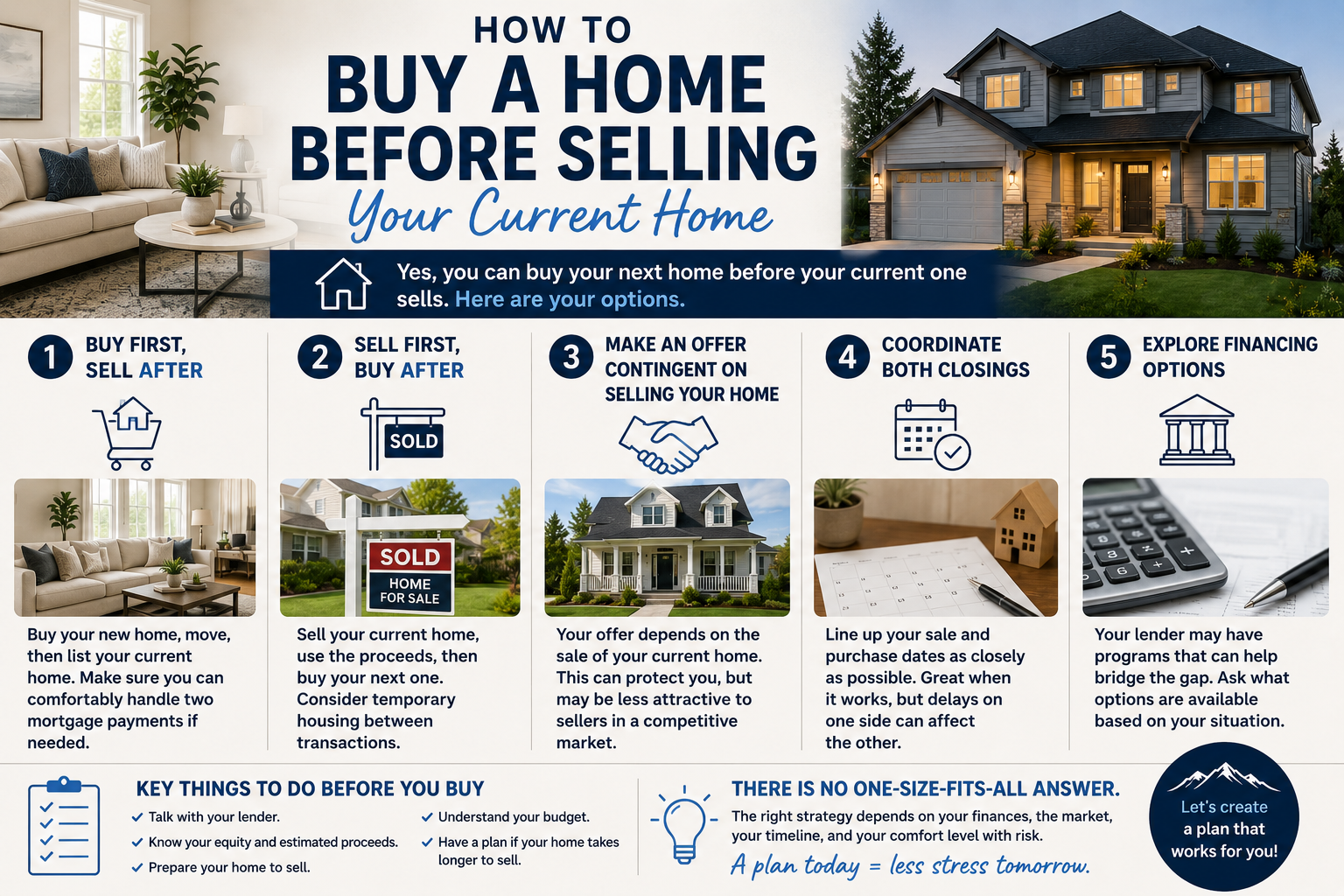
Option 1: Buy First and Sell After
For buyers who can financially qualify to own both properties temporarily, buying first can make the moving process much easier.
You can find your next home, close on it, move your belongings and then prepare your old home for sale.
That can eliminate the pressure of trying to coordinate two closings perfectly.
It can also make your current home easier to clean, stage and show once you've moved out.
But there's an obvious downside.
For some period of time, you may own two homes.
That could mean two mortgage payments along with utilities, insurance and other ownership expenses.
Before choosing this strategy, understand how long you could comfortably carry both properties if your current home takes longer to sell than expected.
Option 2: Sell First and Buy After
Financially, this can be one of the simpler approaches.
You sell your current home first, receive the proceeds and then use those funds toward your next purchase.
The challenge is housing.
Where do you live between the two transactions?
Some sellers may arrange temporary housing, stay with family or use a short term rental while searching for their next home.
It's not always the most convenient option, but it can remove a lot of financial uncertainty.
Option 3: Make Your Purchase Contingent on Selling Your Home
Depending on the market and seller, you may be able to make an offer on your next home that is contingent upon selling your current property.
Essentially, your ability to complete the new purchase depends on the sale of your existing home under the terms of the contract.
This can help protect buyers who need the proceeds from their current home.
However, it can also make an offer less attractive to a seller.
From the seller's perspective, their transaction is now partly dependent on another property selling.
In a competitive situation, a buyer without a home sale contingency may have an advantage.
That doesn't mean contingent offers don't work.
It means we need to consider how competitive the property is and structure the offer strategically.
Option 4: Coordinate the Two Closings
Another possibility is selling your current home and purchasing the next one on closely coordinated timelines.
Ideally, the proceeds from your sale become available for the next purchase according to the transaction and financing requirements.
This can work well when everything stays on schedule.
But there are a lot of moving pieces.
Your buyer has financing.
Your purchase has financing.
There may be appraisals, inspections, title work and other deadlines happening on both properties.
A delay in one transaction can potentially affect the other.
Good communication between your real estate professionals, lenders and title companies becomes especially important.
Option 5: Explore Financing That May Help Bridge the Gap
Depending on your financial situation, there may be financing strategies that can help you purchase before your current home sells.
For example, some homeowners may explore options involving their existing home equity or other financing arrangements.
These options can come with additional costs, qualification requirements and risks.
Your lender or qualified financial professional should explain what is available and how it would affect your specific financial situation.
Don't assume you need to sell first until you've actually explored your options.
Should You List Your Home Before You Start Shopping?
Sometimes.
If you know you need your current home sold before you can complete another purchase, getting your property ready early can put you in a stronger position.
That doesn't necessarily mean putting it on the market immediately.
It could mean completing repairs, decluttering, preparing for photography and determining a listing strategy so you're ready to move quickly once the right home appears.
The worst time to discover you need three weeks to prepare your house is after you've found the home you want to buy.
What if You Find the Perfect House Too Soon?
This happens.
You tell yourself you're "just looking."
Then you walk into the house.
It's perfect.
Now what?
This is exactly why having a plan before touring homes matters.
If we've already talked with your lender, estimated your home's value and discussed your selling strategy, we know what options you have.
Without that preparation, you may have to make major financial decisions very quickly.
What if Your Current Home Doesn't Sell as Quickly as Expected?
This is another scenario you should plan for before buying first.
What happens if your home takes 30 days longer to sell than you expected?
What about 60 days?
Could you comfortably carry both properties?
Would you consider adjusting your listing price?
Do you have savings available?
Understanding your backup plan before you need it can prevent a stressful situation later.
Don't Overestimate What You'll Make From Your Sale
If you're planning to use proceeds from your current home toward the next one, be conservative.
Your estimated market value isn't the same as your expected net proceeds.
You may have a mortgage payoff and other transaction related expenses.
The final sale price could also be different from your original listing price.
Build your next purchase around realistic numbers rather than the most optimistic possible outcome.
Think About the Moving Logistics Too
The financial side gets most of the attention, but there's also the actual move.
If you close on both homes around the same time, when do you get possession?
When does your buyer get possession of your old home?
When are the movers coming?
Where will your belongings go if the dates don't line up perfectly?
Real estate contracts and possession arrangements can affect those answers.
Plan the move alongside the transaction instead of waiting until the week of closing.
Which Option Is Best?
There isn't one strategy that works for every homeowner.
Buying first may provide convenience but create more financial exposure.
Selling first may provide financial certainty but require temporary housing.
A contingent offer may protect your ability to purchase but potentially make your offer less competitive.
Coordinating both transactions can work beautifully but requires careful planning.
The right answer depends on your situation.
Create the Plan Before You Find the House
This is the biggest takeaway.
If you already own a home and you're thinking about moving, don't wait until you find your dream house to figure out what happens to your current one.
Talk with your lender.
Understand your equity.
Get an idea of what your home could sell for.
Determine whether you can qualify while carrying both mortgages.
Discuss your possible purchase and sale timelines.
Then start shopping.
If you're planning to buy and sell in Northern Utah or anywhere along the Wasatch Front, having both sides of the move planned from the beginning can make a complicated transaction much easier.
Buying and selling at the same time involves more moving pieces.
But with the right strategy, those pieces can work together.
Recent Posts