
How to Make a Strong Offer on a House Without Overpaying
You found the house.
It has the right layout, the right location and maybe even the backyard you've been hoping for.
Now comes the stressful part.
How do you make an offer that's strong enough to win without paying more than you should?
It's one of the biggest challenges buyers face, especially when a great home attracts multiple offers.
The good news is that a competitive offer isn't only about offering the highest price.
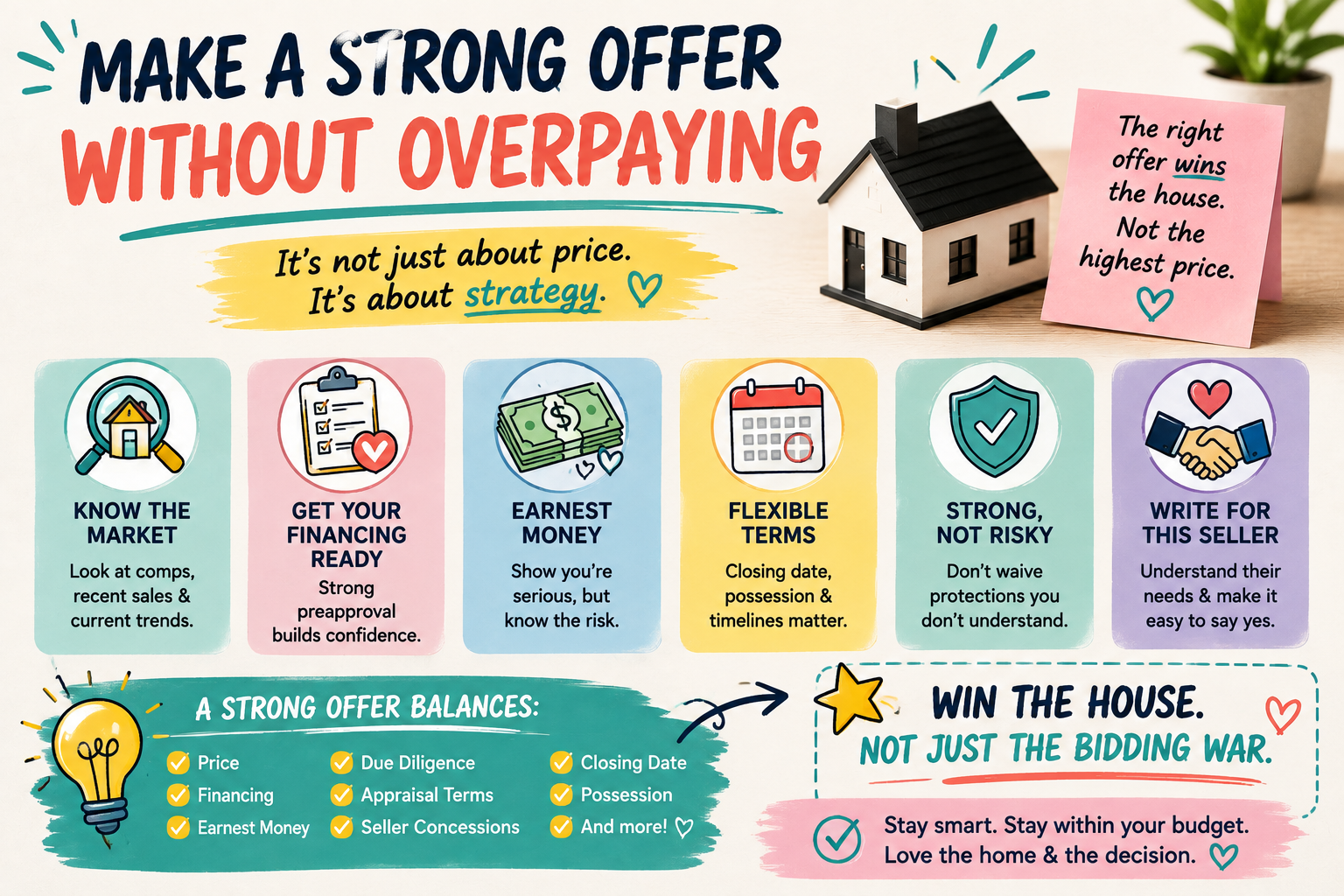
Price matters, but so do financing, earnest money, contingencies, deadlines, seller concessions, closing dates and dozens of other details that can make one offer more appealing than another.
Here's how Utah home buyers can build a strong offer without automatically throwing more money at the property.
Start With the Market Value
Before deciding what to offer, look at the market.
What have comparable homes recently sold for?
How does this property compare?
Is it updated?
Does it need work?
How long has it been listed?
Has the seller already adjusted the price?
Are similar homes selling quickly?
Your real estate agent can help you review comparable properties and current market conditions.
The list price is important, but it doesn't automatically tell you what the home is worth.
Understand the Difference Between Price and Value
A seller can list a home for any price they choose.
That doesn't necessarily mean buyers will agree with it.
At the same time, a home listed at $500,000 isn't automatically overpriced just because you hoped to pay $475,000.
Market value comes from what buyers are willing to pay for comparable properties under current conditions.
We want your offer based on actual information rather than emotion or an arbitrary discount from the asking price.
Find Out What's Happening With the Listing
Context matters.
A home that hit the market yesterday with several interested buyers is a very different situation from a home that's been sitting for 90 days.
Your agent may be able to gather useful information about the seller's situation and activity on the listing.
Are there other offers?
Does the seller have a preferred closing timeline?
Are there terms that matter particularly to them?
We don't always get every answer.
But the more we understand, the better we can structure the offer.
Decide Your Maximum Before Emotions Take Over
Before submitting an offer, decide what the home is worth to you.
Ask yourself:
"If someone else gets this house for $5,000 more than my offer, am I okay with that?"
Maybe the answer is yes.
Maybe you'd be devastated because you would have happily paid another $5,000.
That's useful information.
Determine the highest amount you're genuinely comfortable paying based on your finances and the property.
Then don't let competition push you beyond that simply because you want to win.
Winning the offer isn't helpful if you regret the price afterward.
Get Fully Prepared With Your Financing
A strong offer starts before you ever find the house.
If you're financing the purchase, work with your lender early.
Have your preapproval ready.
Understand your budget.
Know approximately how different purchase prices could affect your payment and cash requirements.
When the right property appears, you want to be ready to make a decision rather than spending two days trying to figure out whether you qualify.
A Strong Preapproval Matters
From the seller's perspective, price is only useful if the buyer can actually complete the purchase.
A well prepared financed buyer may be more attractive than a buyer whose financing looks uncertain.
Make sure your lender has the information they need and that your preapproval reflects your current financial situation.
If your finances change while you're shopping, update your lender.
Consider Your Earnest Money
Earnest money can be another way to demonstrate that you're serious about the transaction.
A buyer may choose to offer a larger earnest money deposit as part of a competitive strategy.
But more earnest money can also mean more money potentially at risk depending on the contract terms.
Don't increase earnest money just because you think bigger automatically means better.
Understand when it may be refundable and when it could become nonrefundable.
Think Carefully About Due Diligence
Sellers may look at the buyer's due diligence terms when comparing offers.
A shorter due diligence period may potentially make an offer more attractive because it gives the seller greater certainty sooner.
But buyers shouldn't casually give up the opportunity to properly investigate the property.
You still need enough time to schedule inspections and evaluate what you're purchasing.
The goal isn't to remove every protection.
It's to make your timelines efficient where appropriate.
Don't Waive Protections You Don't Understand
In a competitive market, buyers sometimes hear that they need to waive everything to win.
Inspection.
Appraisal.
Financing.
Every contingency possible.
That's not automatically a good strategy.
Waiving contractual protections can create significant financial risk.
Before agreeing to aggressive terms, understand exactly what could happen if something goes wrong.
A house isn't worth putting yourself into a financial situation you don't understand.
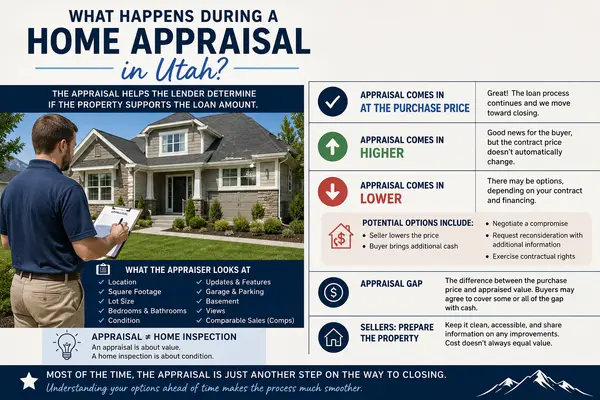
Appraisal Strategy Can Strengthen an Offer
If you're offering above what comparable sales appear to support, think about the appraisal.
If the property appraises below your purchase price, what happens?
Depending on the offer, a buyer may choose to provide some form of appraisal gap coverage.
For example, a buyer might agree to bring additional cash up to a specified amount if the appraisal is low.
That can potentially provide the seller with additional confidence in the offer.
But don't promise an appraisal gap you can't actually afford.
Seller Concessions Affect the Offer
If you're asking the seller to contribute toward allowable closing costs, understand that the seller is evaluating that request as part of the overall financial offer.
Imagine two buyers offer $500,000.
One asks for $10,000 in seller concessions.
The other asks for none.
Those offers don't look financially identical to the seller.
This doesn't mean you shouldn't ask for concessions if you need them.
It means we need to account for them when building the rest of your offer.
The Closing Date Can Be Valuable
Not every seller wants the fastest possible closing.
Maybe they're buying another home.
Maybe they're relocating.
Maybe they need additional time to move.
If you have flexibility, offering a closing timeline that works well for the seller can make your offer more appealing without increasing your purchase price.
Sometimes convenience has real value.
Possession Can Matter Too
Closing and possession aren't necessarily the same thing.
A seller may need a little extra time before turning over the property.
Depending on the situation and contract, flexibility around possession could potentially make your offer more attractive.
Again, this doesn't mean agreeing to terms that don't work for you.
We're looking for areas where your needs and the seller's needs overlap.
Keep the Offer Clean
A strong offer is often a straightforward offer.
That doesn't mean removing important protections.
It means avoiding unnecessary complications.
If there's a term you don't actually need, consider whether it belongs in the offer.
The easier your offer is for the seller to understand and evaluate, the better.
Don't Assume Cash Always Wins
Cash offers can be attractive because they may remove certain financing related concerns.
But financed buyers beat cash buyers all the time.
Why?
Because the seller looks at the complete offer.
If the cash buyer offers significantly less money or less favorable terms, a strong financed offer may still be more attractive.
Don't give up just because you hear there's a cash buyer.
Write the Offer for This Seller
One of the biggest mistakes buyers make is using the exact same strategy for every property.
A home with ten offers requires a different conversation than a home that's been sitting for three months.
A seller who needs a quick closing may value different terms than a seller who needs extra time.
The best offer strategy is specific to the property and the situation.
Know When to Walk Away
Sometimes another buyer is simply willing to pay more or accept more risk than you are.
That's okay.
You don't have to win every house.
If the price climbs beyond what the property is worth to you or the terms become more aggressive than you're comfortable with, walking away can be the right decision.
There will be another home.
Buying a house should help you move toward your financial and personal goals, not make you feel trapped by a decision you made during a bidding war.
Don't Try to Win Just for the Sake of Winning
Multiple offer situations can become emotional very quickly.
You hear there are six offers and suddenly the goal changes.
Instead of asking:
"Is this house worth this amount to me?"
You start asking:
"What do I need to do to beat everybody?"
Those aren't the same question.
Your goal isn't to defeat the other buyers.
Your goal is to buy the right home at terms you're comfortable living with after the excitement wears off.
A Strong Offer Is About More Than Money
Sometimes the best way to strengthen an offer is increasing the price.
Sometimes it's improving the earnest money.
Sometimes it's adjusting a deadline.
Sometimes it's offering a better closing timeline.
Sometimes it's reducing a seller concession.
And sometimes the smartest decision is leaving the offer exactly where it is.
If you're buying a home in Northern Utah or anywhere along the Wasatch Front, the goal shouldn't be to make the most aggressive offer possible.
It should be to make the strongest offer you're comfortable with.
Because getting the house is exciting.
Getting the house at terms you still feel good about after closing is even better.
Recent Posts