What Is a Backup Offer on a House? How Backup Contracts Work in Utah
You finally find the house.
It has the perfect kitchen, the backyard you've been dreaming about, and the location you've been searching for.
You call your realtor, ready to schedule a showing.
Then you hear the words nobody wants to hear.
"It's already under contract."
Disappointing, right?
But what if that doesn't necessarily mean you've missed your opportunity?
In some situations, you may still be able to submit a backup offer.
And if the seller accepts it, you could be next in line if the current transaction doesn't work out.
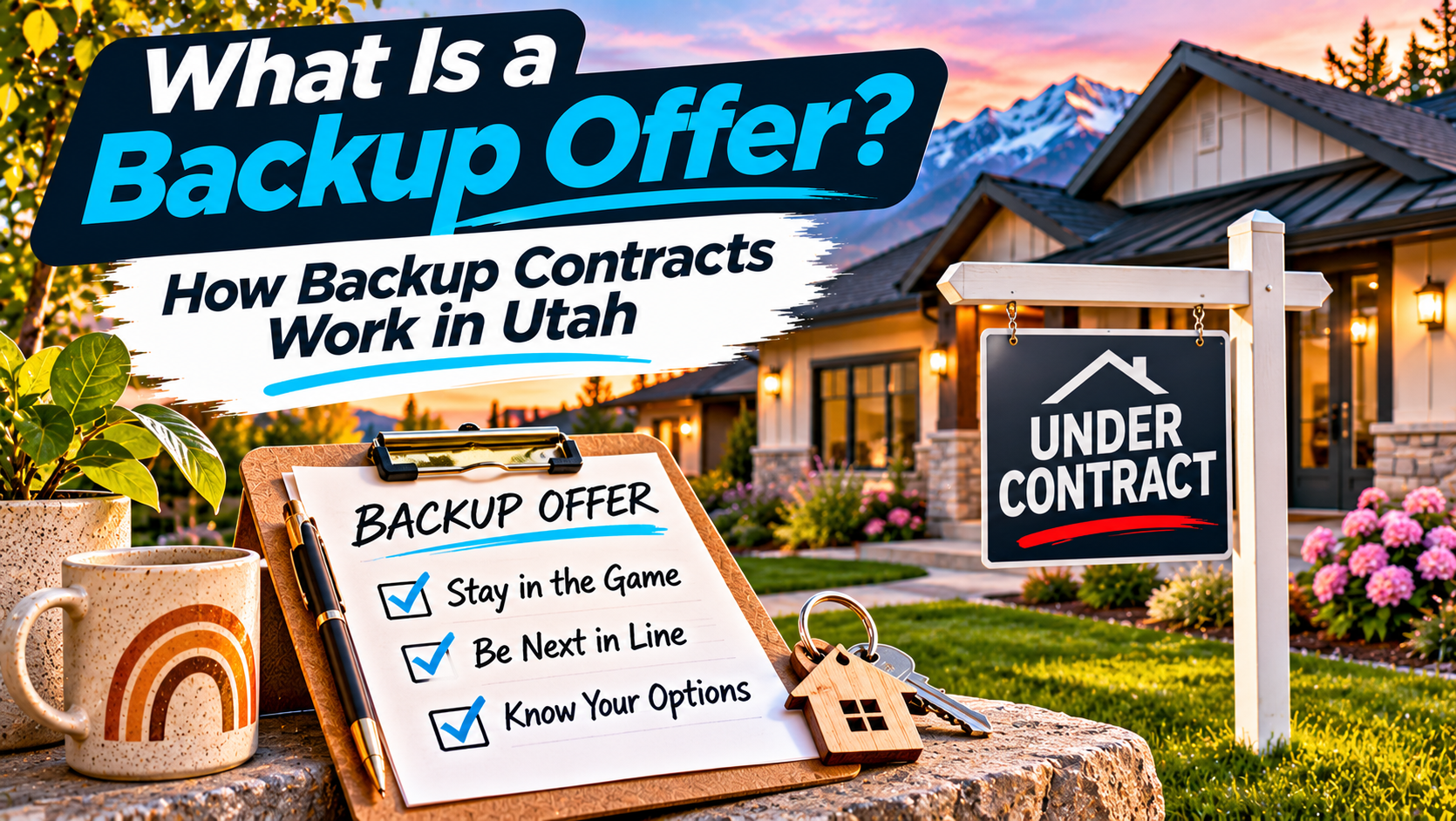
A backup offer is an offer a seller accepts as a secondary contract, generally allowing the backup buyer to move into the primary position if the existing purchase contract ends under the terms of the backup agreement.
Backup offers can be useful for buyers and sellers, but they come with important considerations.
If you're buying or selling a home in Davis County, Weber County, Box Elder County, Tooele County, or elsewhere along Utah's Wasatch Front, here's what you need to know.
What Is a Backup Offer in Real Estate?
A backup offer is an offer submitted on a property that is already under contract with another buyer.
If the seller accepts the backup offer, the parties generally enter into an agreement that establishes when and how the backup buyer may become the primary buyer.
Think of it like being next in line.
The seller already has an accepted offer.
However, the first transaction hasn't closed yet.
If that transaction falls apart, the backup buyer may have an opportunity to proceed without the seller needing to start the entire marketing process over again.
But the exact rights and obligations depend on the contracts and addenda signed by the parties.
Can You Make an Offer on a House That's Already Under Contract?
Yes, you can generally submit an offer on a property that's already under contract.
However, the seller isn't required to accept it.
Some sellers are interested in backup offers because they want additional security while waiting for the first transaction to close.
Others may prefer not to enter into another agreement.
The seller's existing contractual obligations also matter.
A backup agreement must be structured so that it doesn't improperly conflict with the seller's obligations to the primary buyer.
How Does a Backup Offer Work in Utah?
Imagine a home in Layton is listed for $525,000.
A buyer makes an offer, the seller accepts, and the property goes under contract.
A few days later, another buyer sees the listing and falls in love with the home.
That buyer submits a backup offer.
The seller decides to accept it using appropriate contractual documents.
Now there are two different contractual positions.
The first buyer has the primary purchase contract.
The second buyer has a backup contract.
If the first transaction closes successfully, the backup buyer doesn't purchase the home.
If the first contract is properly terminated, the backup contract may become operative according to its terms.
The important distinction is that an accepted backup offer is more than simply telling the seller you're interested. It can create binding contractual obligations.
Is a Backup Offer Legally Binding?
An accepted backup offer can create a legally binding contract.
That means buyers should take it seriously.
You shouldn't assume that a backup contract is merely a reservation or a casual expression of interest.
Depending on the agreement, you may have obligations involving earnest money, deadlines, financing, and other purchase terms.
Before signing, review the contract carefully with your real estate agent and seek legal advice if you have questions about your rights.
What Happens if the First Buyer Backs Out?
If the primary buyer properly terminates the purchase agreement, the seller may be able to move forward with the backup buyer.
However, the process isn't necessarily automatic in every transaction.
The backup agreement may require written notice, documentation, or other steps before the backup buyer's obligations become fully operative.
For example, the agreement may specify when the backup buyer's due diligence or financing deadlines begin.
The exact language matters.
A buyer should never assume that all deadlines begin only after the first transaction ends unless the contract expressly provides for that arrangement.
Why Do Home Sales Fall Through?
There are several reasons a transaction might not make it to closing.
Financing Problems
A buyer may experience difficulties obtaining final mortgage approval.
For example, changes in employment, credit, or financial circumstances can affect financing.
Inspection Concerns
An inspection may uncover significant property problems.
Depending on the contract, the buyer may have rights to terminate during due diligence.
Appraisal Issues
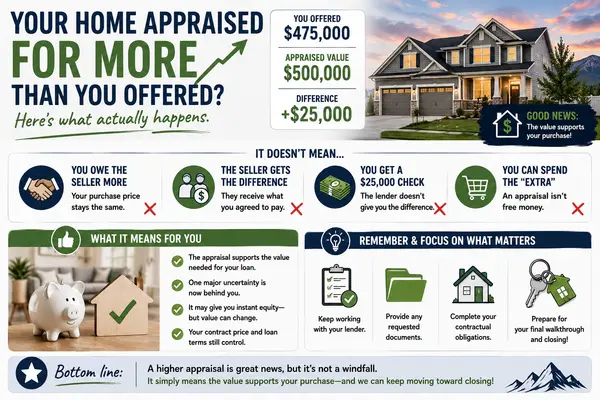
An appraisal may come in below the agreed purchase price.
That can create financing or negotiation challenges.
Home Sale Contingencies
A buyer may need to sell an existing property before completing the purchase.
If that transaction doesn't happen as expected, the purchase may be affected.
Other Contractual Problems
Title concerns, missed deadlines, disagreements, or other circumstances can also affect a transaction.
However, an accepted contract doesn't simply disappear because one party changes their mind.
The legal basis for termination matters.
Does a Backup Offer Have to Be Higher Than the First Offer?
No.
A backup offer doesn't necessarily need to exceed the primary buyer's purchase price.
The seller may consider several factors, including:
-
Purchase price.
-
Financing type.
-
Earnest money.
-
Proposed closing date.
-
Contingencies.
-
Requested seller concessions.
-
The buyer's ability to complete the purchase.
-
Other contractual terms.
For example, a seller might prefer a backup offer with strong financing and fewer uncertainties over one offering a slightly higher price.
The strongest offer isn't always the one with the highest number.
Can You Negotiate the Price on a Backup Offer?
Yes.
A backup offer is still an offer to purchase real estate.
The buyer and seller may negotiate the price and other terms before reaching an agreement.
However, the seller's willingness to negotiate may depend on the strength of the primary contract and the level of interest in the property.
A seller who already has a strong primary offer may be less motivated to accept a lower backup price.
Every transaction is different.
Do You Have to Pay Earnest Money on a Backup Offer?
That depends on the agreement.
Some backup contracts may require earnest money to be delivered according to specified terms.
Others may address the timing differently.
Buyers should carefully review when earnest money is due, where it will be held, and what happens if the backup position never becomes primary.
Don't assume that earnest money is unnecessary simply because you're the backup buyer.
What Happens to Earnest Money if the First Sale Closes?
If the primary transaction closes, the backup agreement may terminate or otherwise conclude according to its terms.
The handling of any earnest money depends on the agreement and applicable procedures.
Buyers should confirm the relevant provisions before signing.
It's important to distinguish between money being held in connection with a backup contract and money that becomes subject to potential forfeiture under a purchase agreement.
Can You Make Backup Offers on Multiple Homes?
This is something buyers should approach carefully.
Submitting offers isn't necessarily the same as entering into multiple binding contracts.
If you sign more than one accepted backup agreement, you could potentially create overlapping obligations.
For example, imagine you have an accepted backup contract on one home.
Then you find another property and enter into a separate purchase agreement.
If the first property's primary contract terminates, you may face conflicting contractual commitments.
Before entering into multiple agreements, understand your cancellation rights and obligations.
Consult a qualified Utah real estate attorney when necessary.
Can You Cancel a Backup Offer?
Your ability to cancel depends on whether the offer has been accepted and what the agreement says.
Before acceptance, an offer may generally be withdrawn subject to applicable rules and circumstances.
After acceptance, however, the parties may have binding obligations.
Some backup agreements contain specific cancellation provisions.
Others may limit when and how the buyer can withdraw.
Never assume you can cancel an accepted backup offer at any time without consequences.
Review the contract before signing.
How Long Can a Backup Offer Stay in Place?
There isn't one universal timeline for every backup agreement.
The duration depends on the contract.
For example, a backup agreement may remain effective until a specified date, until the primary transaction closes, or until another contractual event occurs.
Buyers should understand how long they may be committed.
If the primary closing date is extended, the effect on the backup contract will depend on its terms.
Can the Seller Accept More Than One Backup Offer?
A seller may receive multiple offers while a property is under contract.
However, entering into multiple binding backup agreements requires careful consideration of the seller's existing obligations and the terms of each agreement.
The seller shouldn't create conflicting contractual commitments.
If multiple buyers are interested, the seller and their real estate professional should determine how to handle those offers appropriately.
Legal guidance may be necessary.
What Does Backup Position Mean on a Real Estate Listing?
When you see a listing described as accepting backup offers, it generally means the property already has an accepted purchase contract, but the seller may still consider additional offers.
However, listing status terminology can vary by MLS rules and brokerage practices.
A property being marketed for backup offers doesn't guarantee that the seller will accept another offer.
It also doesn't mean the current transaction is likely to fail.
The primary buyer may still close successfully.
Can You Tour a Home That's Already Under Contract?
Sometimes.
Whether showings continue depends on the seller's preferences, listing arrangements, and other circumstances.
Some sellers continue allowing showings while their property is under contract.
Others stop showings once an offer is accepted.
Your real estate agent can help determine whether a showing is available.
Should You Make a Backup Offer Without Seeing the House?
It's generally preferable to evaluate a property before entering into a binding purchase agreement.
However, circumstances vary.
If you haven't toured the home, consider the risks carefully.
You may need to rely on photographs, available documents, and other information until access is possible.
Make sure you understand your contractual rights to inspect the property and the deadlines involved.
A backup position shouldn't encourage you to skip important due diligence.
What Are the Benefits of a Backup Offer for Buyers?
A backup offer can offer several potential advantages.
You May Get Another Opportunity
If the primary transaction ends, you may have a path toward purchasing a home you otherwise thought was unavailable.
You May Avoid Another Round of Competition
Depending on the agreement, the seller may already be committed to moving forward with your contract if the primary agreement ends.
You Can Establish Terms in Advance
Rather than waiting until the home becomes available again, you may be able to negotiate purchase terms while the first transaction is pending.
You Can Demonstrate Serious Interest
An accepted backup agreement may provide the seller with more certainty than an informal request to be contacted later.
However, these potential advantages come with contractual responsibilities.
What Are the Risks of a Backup Offer for Buyers?
Backup offers also have disadvantages.
The First Buyer May Close
The most obvious risk is that you never get the house.
The primary transaction may proceed without problems.
You May Be Contractually Committed
Depending on the agreement, you may have limited flexibility to pursue another property.
Your Timeline May Be Uncertain
You may not know whether or when the backup position will become primary.
Market Conditions May Change
Mortgage rates, your financial situation, or your preferences may change while you wait.
You May Have Limited Information
The primary transaction's inspection findings, negotiations, or financing issues may not be available to you.
For these reasons, buyers should evaluate the backup agreement carefully.
Why Would a Seller Accept a Backup Offer?
From the seller's perspective, a backup offer can provide additional security.
Imagine you're selling your home in Syracuse.
You've accepted an offer and are preparing for closing.
Then the buyer's financing falls through.
Without a backup agreement, you may need to put the home back on the market and begin searching for another buyer.
With an accepted backup contract, you may have another transaction ready to proceed under the agreed terms.
That can potentially reduce delays and uncertainty.
Does a Backup Offer Make the First Buyer Nervous?
Sometimes buyers may feel additional pressure knowing that another interested party is waiting.
However, a backup offer generally doesn't eliminate the primary buyer's contractual rights.
The seller still must honor the existing purchase agreement.
A backup buyer cannot simply replace the primary buyer because they offer more money.
The primary contract must be addressed according to its terms.
Can a Seller Cancel the First Contract to Accept a Better Backup Offer?
Generally, a seller cannot simply disregard a binding purchase agreement because another buyer offers better terms.
The seller's ability to terminate depends on the contract and applicable law.
Attempting to cancel without a valid contractual or legal basis may expose the seller to liability.
A backup offer is not a substitute for honoring the existing agreement.
What Happens if the First Buyer Misses a Deadline?
Missing a contractual deadline doesn't necessarily mean the purchase agreement automatically terminates.
The consequences depend on the agreement, the type of deadline, any applicable notice requirements, and the parties' actions.
A seller should not assume they are free to proceed with the backup buyer until the primary agreement has been properly resolved.
This is an area where legal guidance may be especially important.
Can the Backup Buyer Request Repairs?
If the backup agreement becomes operative and provides applicable due diligence rights, the buyer may be able to investigate the property and request repairs or other negotiated terms.
However, the seller isn't automatically required to agree to those requests.
The buyer's options depend on the agreement and the relevant deadlines.
Do Backup Offers Work for New Construction Homes?
Potentially.
A buyer may be interested in a new construction home that is already under contract.
Whether the builder or seller accepts backup offers depends on their policies, contractual obligations, and the specific transaction.
Builder contracts may differ significantly from standard resale purchase agreements.
Buyers should review the applicable documents carefully.
Backup Offers in Davis County, Utah
Davis County includes Layton, Syracuse, Clearfield, Kaysville, Farmington, and Clinton.
If you find a home you love that's already under contract, it may be worth asking whether the seller is considering backup offers.
However, don't assume that every under-contract listing is accepting additional offers.
Your real estate agent can help determine whether a backup strategy makes sense.
Backup Offers in Weber County
In Weber County, including Ogden, North Ogden, Roy, West Haven, and Pleasant View, buyers may encounter properties that attract interest from multiple parties.
If your preferred home is already under contract, an accepted backup agreement could provide another opportunity.
Just make sure you understand the contractual commitment before proceeding.
Backup Offers in Box Elder County
In Box Elder County, including Brigham City, Tremonton, Perry, and Willard, backup offers may be useful when a property has features that are difficult to find elsewhere.
For example, a buyer looking for a particular lot size, floor plan, or location may prefer to remain interested in a specific property.
A backup offer can be one possible strategy, depending on the circumstances.
Backup Offers in Tooele County
In Tooele County, including Tooele, Grantsville, and surrounding communities, buyers may also consider backup offers when a desirable property goes under contract.
The key is balancing the opportunity with the uncertainty and contractual obligations involved.
Questions to Ask Before Submitting a Backup Offer
Before signing a backup agreement, consider asking:
-
Is the seller currently accepting backup offers?
-
What terms would make a backup offer attractive?
-
When would the backup contract become operative?
-
What happens if the primary buyer closes?
-
Is earnest money required, and when is it due?
-
When do due diligence and financing deadlines begin?
-
Can the backup buyer cancel before becoming primary?
-
What happens if the primary closing date changes?
-
Can the buyer pursue another property while waiting?
-
What notices are required if the primary contract terminates?
Understanding these details can help prevent unexpected complications.
Is Making a Backup Offer Worth It?
Sometimes, absolutely.
If you've found a property that meets your needs and you're comfortable with the contract terms, a backup offer may be worth considering.
However, it's important to maintain realistic expectations.
The first transaction may close.
You may wait without ever getting the opportunity to purchase.
And an accepted backup agreement can create real obligations.
The right decision depends on your goals, timeline, financial situation, and the terms available.
The Bottom Line: Under Contract Doesn't Always Mean the Opportunity Is Gone
Finding out that your dream home is already under contract can be frustrating.
But in some situations, a backup offer may give you another opportunity.
For buyers, it can provide a path toward purchasing a home if the first transaction doesn't close.
For sellers, it may provide additional security while the primary sale is pending.
The key is understanding how the backup agreement works and what obligations it creates.
If you're buying or selling a home in Davis County, Weber County, Box Elder County, Tooele County, or anywhere along the Wasatch Front, the Graham Allen Group can help you evaluate your options, understand important contract terms, and navigate the transaction.
Because sometimes, the home you thought you missed might still be worth pursuing.
Categories
Recent Posts