
What Should You Do Before Listing Your Home for Sale?
You're thinking about selling your house.
So naturally, you start looking around and noticing everything you've ignored for the last five years.
The scuffed baseboards.
The overflowing closet.
The wall you swore you were going to repaint.
The drawer that doesn't close unless you lift it slightly and shove it with your hip.
And suddenly you're convinced you need to renovate the entire house before anyone is allowed to see it.
You probably don't.
Preparing a home for sale isn't about making it perfect.
It's about making smart decisions about where your time and money will actually make a difference.
Before you start ripping out cabinets or ordering new flooring, here's what you should actually do before listing your Utah home for sale.
Call Your Real Estate Agent Before You Start Spending Money
This should be step one.
Not after you renovate the kitchen.
Not after you replace all the flooring.
Before.
Have your real estate agent walk through the property and talk about what buyers in your market are actually looking for.
There may be things worth fixing.
There may also be things you're planning to spend thousands of dollars on that won't meaningfully change your selling outcome.
Let's figure that out before you write the check.
Understand What Your Home Could Be Worth
Before making improvements, you need some idea of where the property fits in the current market.
Look at comparable sales.
What's selling nearby?
How quickly?
What condition are those homes in?
How does your home compare?
If updated homes are selling substantially higher than homes in your current condition, certain improvements may be worth discussing.
If buyers aren't paying much more for those upgrades, spending the money may not make sense.
Stop Looking at Your House Like You Live There
This is hard.
Your home is full of your stuff.
Your routines.
Your memories.
Your furniture.
But buyers aren't evaluating your memories.
They're trying to picture their own life in the space.
Walk through your house like you've never seen it before.
What catches your eye?
What feels crowded?
What looks unfinished?
What would you notice during a ten minute showing?
That's the perspective we need.
Start Packing Before You List
You're moving anyway.
Start now.
Pack the things you don't use every day.
Seasonal items.
Extra décor.
Collections.
Books.
Kitchen gadgets.
Clothes you aren't currently wearing.
The goal isn't to make your house empty.
It's to give the rooms some breathing room.
Bonus: you're getting part of your move done early.
Your Closets Count
Please don't take everything you removed from the living room and shove it into the closet.
Buyers open closets.
They open pantries.
They look at storage.
If every closet is packed from floor to ceiling, it can make the home feel like it doesn't have enough storage.
You don't need empty closets.
Just make them look functional.
Declutter the Kitchen Counters
Your kitchen may be beautiful.
But if the counters are covered with the toaster, air fryer, blender, knife block, paper towel holder, vitamins, mail, fruit basket and three water bottles, buyers aren't seeing the kitchen.
They're seeing stuff.
Clear some space.
Let buyers see the countertops.
The same applies to bathroom counters.
Deep Clean Everything
If you're only going to do one thing before listing, clean.
Really clean.
Floors.
Baseboards.
Bathrooms.
Windows.
Appliances.
Cabinets.
Light fixtures.
Doors.
Corners.
Places you've stopped noticing because you see them every day.
A clean home feels better maintained.
And buyers notice.
Deal With Odors
You may not smell your own house anymore.
Buyers will.
Pets.
Smoke.
Cooking.
Musty basements.
Garbage disposals.
Carpet.
Whatever the source is, address it.
And please don't try to solve a strong odor by filling every room with overpowering fragrance.
Now the house smells like the original problem plus twelve vanilla candles.
Find the source.
Fix the Little Broken Things
You've lived with the loose doorknob for three years.
You know exactly how to turn it so it works.
The buyer doesn't.
Fix it.
Replace burned out bulbs.
Repair obvious holes.
Fix dripping faucets.
Replace broken switch plates.
Tighten loose handles.
Take care of the small maintenance items you've learned to ignore.
When buyers see several little broken things, they may start wondering what larger maintenance has been ignored.
Look at Your Walls
You don't automatically need to repaint the entire house.
But look at the condition.
Are there heavily scuffed areas?
Large patches?
Unfinished touch ups?
Extremely bold colors that dominate the room?
Fresh paint in the right places can make a home feel cleaner.
But let's decide where it's actually needed instead of painting every room simply because you're selling.
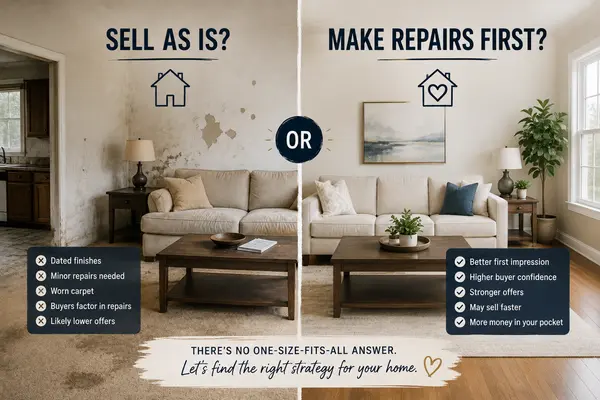
Think Twice Before Replacing Flooring
Old flooring doesn't always need to be replaced.
Damaged, badly stained or strong smelling flooring is another conversation.
Before spending thousands replacing carpet or hard surfaces throughout the house, let's compare the cost with the likely benefit.
Sometimes cleaning is enough.
Sometimes replacement makes sense.
Sometimes the next buyer would rather choose their own flooring anyway.
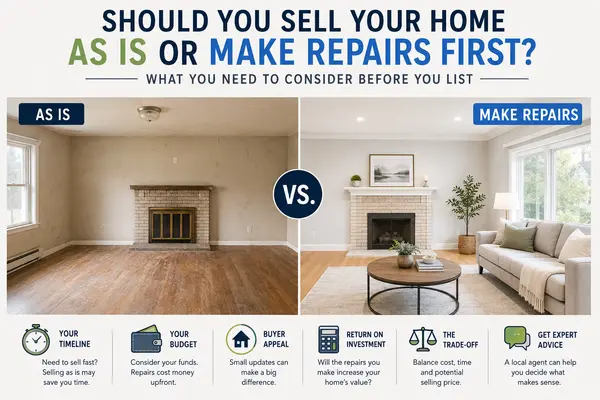
Don't Remodel Just to Sell
This is worth repeating.
Please don't spend $50,000 renovating your kitchen without first understanding whether you're likely to get that money back.
A dated kitchen can still sell.
A dated bathroom can still sell.
The question is whether the improvement meaningfully changes the home's marketability or expected selling price.
Renovations should be a financial decision, not a panic response to listing your house.
Check the Outside
Buyers start forming an opinion before they walk through the front door.
Walk across the street and look at your house.
Does the yard need attention?
Are weeds taking over?
Is the porch cluttered?
Is the front door dirty?
Are there dead plants?
Are the house numbers visible?
You don't need a professional landscaping makeover.
You want the property to look cared for.
Make the Entrance Feel Good
The front door gets more attention during a showing than you might realize.
Buyers stand there while their agent opens the lockbox.
They have time to look around.
Sweep the porch.
Clean the door.
Remove clutter.
Replace a dead porch light.
Make sure the lock works smoothly.
That first thirty seconds matters.
Let the Light In
Before photos and showings, open the blinds and curtains where appropriate.
Clean the windows.
Replace burned out bulbs.
Make sure rooms feel bright and inviting.
Dark spaces can feel smaller.
You don't need stadium lighting.
You just don't want buyers wondering why they can't see the room.
Think About Your Furniture
You don't necessarily need professional staging.
But you may need less furniture.
A room packed with oversized furniture can look smaller than it actually is.
Consider removing pieces that block pathways or overwhelm the room.
We're not trying to showcase every piece of furniture you own.
We're trying to showcase the house.
Hide the Really Personal Stuff
You don't need to remove every family photo and turn your house into a hotel.
But consider putting away particularly personal or sensitive items.
Medication.
Financial documents.
Mail.
Valuables.
Private paperwork.
Anything you don't want strangers seeing.
Remember, buyers will be walking through your home.
Prepare accordingly.
Secure Valuables
This deserves its own reminder.
Put away jewelry, cash, prescription medications, firearms and other valuable or sensitive items.
Showings are generally coordinated and monitored through real estate professionals, but you should still protect important belongings.
If you would be devastated if something disappeared, secure it before the home starts showing.
Gather Important Information
Start collecting information buyers may ask about.
Approximate ages of major systems.
Roof replacement information.
HVAC information.
Recent improvements.
Permits when applicable.
Utility information if useful.
Warranty documents.
Receipts for significant work.
You may not need every piece of it, but having information organized can make questions easier to answer.
Complete Your Seller Disclosures Carefully
Seller disclosures matter.
Take your time.
Answer honestly based on what you know and your legal obligations.
Don't intentionally hide known problems because you're worried they'll scare a buyer away.
Problems discovered later can become much more complicated than problems properly addressed during the transaction.
If you don't understand a disclosure question, ask.
Talk About Photography Before Photo Day
Professional marketing works much better when the home is ready before the photographer arrives.
Don't plan to clean one half of the room and move everything behind the photographer as they work.
Finish decluttering.
Clean.
Make beds.
Clear counters.
Put away pet supplies where practical.
Remove trash cans when appropriate.
Have the house ready to photograph.
The photos may be a buyer's first experience with your property.
Don't Forget the Garage
I know.
You've got to put the boxes somewhere.
The garage can absolutely hold moving boxes.
But if possible, keep enough organization that buyers can understand the space.
If it's a two car garage, we want them to be able to tell that two cars theoretically fit inside it.
Make a Plan for Pets
If possible, have a plan for pets during showings.
Some buyers are afraid of dogs.
Some are allergic to cats.
Some will spend the entire showing worrying that your pet is going to escape through the front door.
You want buyers focused on the house.
Talk with your agent about what makes sense for your specific pets and showing schedule.
Make Showing the Home Easy
This can be difficult when you're still living there.
But the easier the home is to show, the more opportunities buyers have to see it.
That doesn't mean you need to accept a showing at any hour with no notice.
It means thinking realistically about how much flexibility you can provide.
If buyers repeatedly can't get into the property, some will move on to another home.
Have a Plan for Showings
Where are you going to go?
What are you doing with the dog?
How quickly can you get the house ready?
Who needs to know when a showing is scheduled?
Having a routine makes the process much less stressful.
Keep a basket handy for last minute clutter if you need one.
Just don't put the basket in the oven and forget about it.
Understand Your Selling Costs
Before listing, talk about the financial side.
Your mortgage payoff.
Potential title related costs.
Any applicable taxes or fees.
Negotiated compensation.
Potential buyer concessions.
Repairs that may come up.
Moving expenses.
Your real estate professional and settlement provider can help you estimate what the transaction may look like.
Don't focus only on the sales price.
What matters to you financially is what you're actually walking away with.
Figure Out Where You're Going
This sounds obvious.
But selling your home creates another question.
Where are you moving?
Are you buying another home?
Renting?
Relocating?
Do you need the proceeds from this sale to purchase the next property?
Your selling strategy may need to account for your next move.
Think about the entire transition, not just getting this home sold.
Don't Wait Until Everything Is Perfect
Your house will never be perfect.
There's always another project.
Another wall you could paint.
Another drawer you could organize.
Another improvement you could make.
At some point, we need to decide what's actually important and get the home on the market.
The goal isn't perfection.
The goal is preparation.
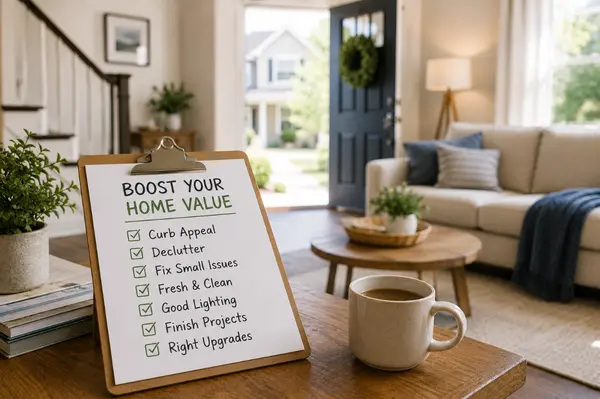
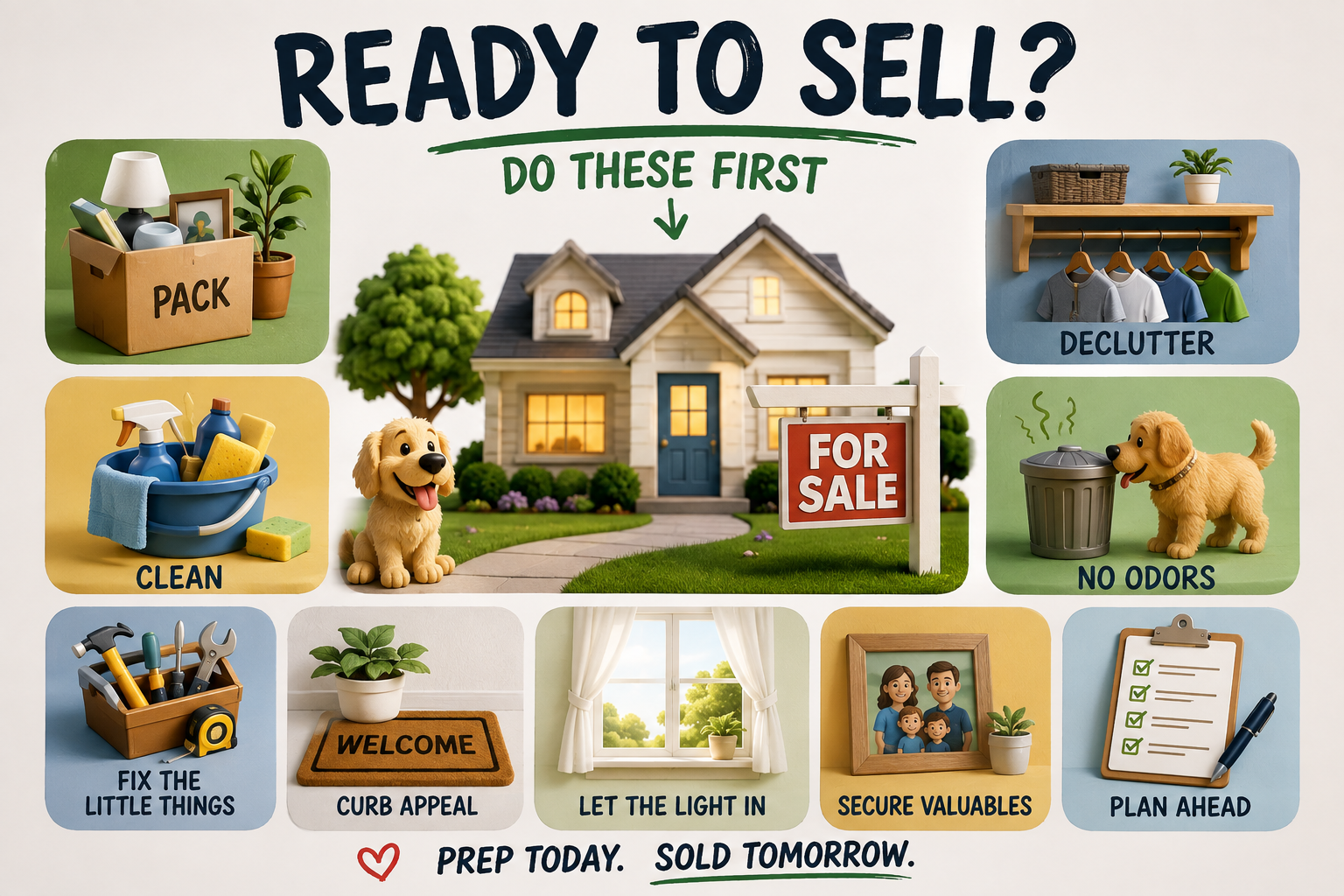
Your Pre Listing Checklist
Before we list, here's what I want us to have handled:
Declutter.
Start packing.
Deep clean.
Address odors.
Fix obvious small maintenance issues.
Improve basic curb appeal.
Prepare for photos.
Secure valuables.
Complete disclosures.
Gather useful property information.
Create a showing plan.
Understand your estimated selling costs.
And most importantly, talk with your real estate agent before spending significant money on improvements.
You Don't Need a Perfect House to Sell
Buyers purchase homes in every condition.
Updated homes.
Dated homes.
Fixer uppers.
Brand new homes.
Homes somebody has lived in and loved for thirty years.
Your job isn't to turn your house into something it isn't.
It's to present what you have as well as reasonably possible, price it appropriately and market it effectively.
If you're thinking about selling a home anywhere in Northern Utah or along the Wasatch Front, start with a conversation before you start with a renovation.
We can walk through the property, identify what actually matters and create a plan that gets your home ready for the market without spending money where you don't need to.
Because sometimes the smartest thing you can do before selling isn't adding something to your house.
It's knowing what you can leave alone.
Categories
Recent Posts